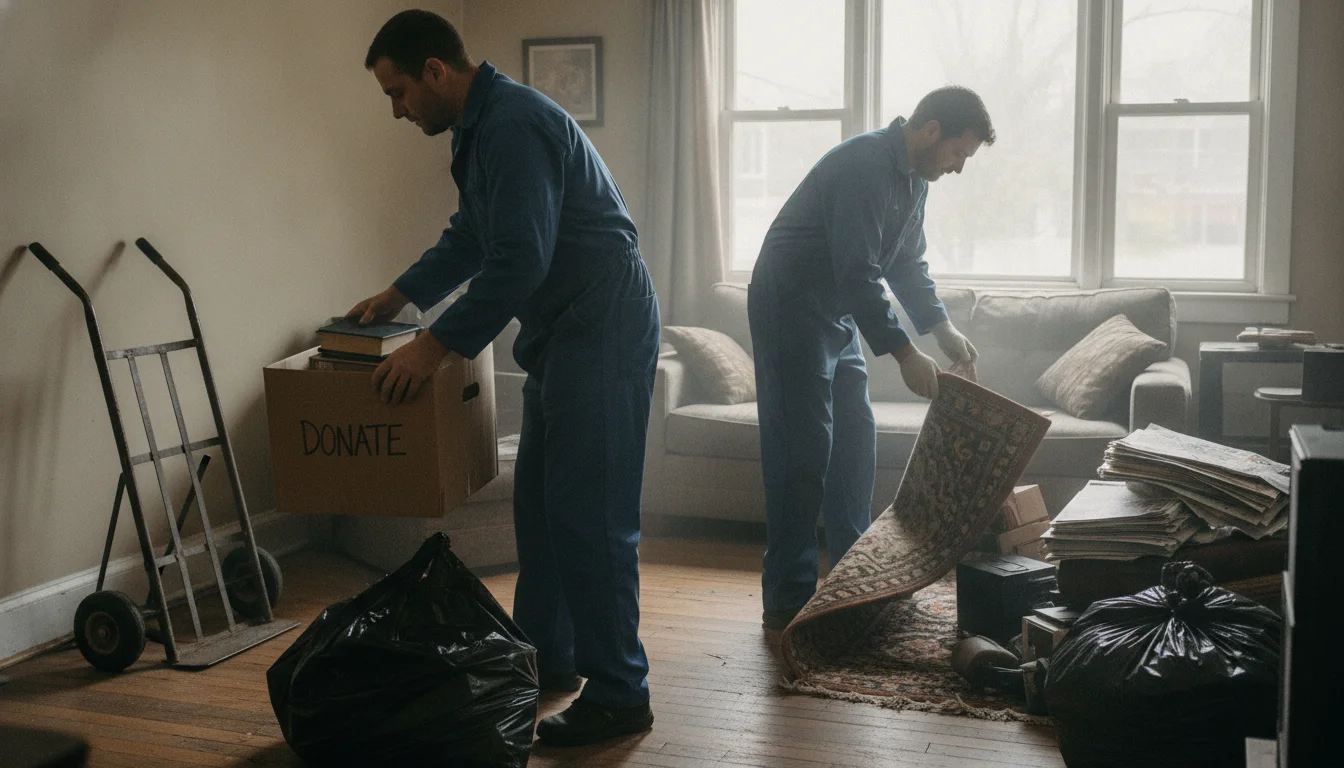
Your home is full, the clock is ticking, and you want a clear plan. If you’ve searched for junk removal near me in Loveland and still feel unsure, this house cleanout FAQs guide explains exactly how professional house cleanouts work. A house cleanout is the complete removal of unwanted items from a home and related spaces by a trained crew that sorts, loads, and hauls for donation, recycling, or disposal—start to finish.
Key Takeaways
- A house cleanout removes unwanted items from living areas, attics, basements, garages, and yards, with sorting, loading, and responsible disposal.
- Quotes depend on volume, labor, access, and disposal needs; photos or a walkthrough help refine timing and scope.
- Most projects finish in hours; larger homes may take most of a day with a larger crew.
- Crews take furniture, appliances, electronics, and yard debris; hazardous materials are restricted by local rules.
- Prep by creating keep/donate/discard zones, clearing paths, and sharing details about heavy or tricky items.
What Is a House Cleanout?
A house cleanout is a full-service removal of items from your property—rooms, garage, attic, basement, and yard—handled by a trained team. They separate what can be donated or recycled from true waste, load items safely, and deliver them to appropriate facilities so you don’t have to lift, sort, or transport anything yourself.
Costs and Pricing for a House Cleanout
What Affects Your Quote
Quotes reflect how much space your items occupy in the truck, the labor needed for safe lifting and carrying, access conditions, and the type of disposal. Stairs, tight hallways, or long carries add time. Heavy or specialty items—think upright pianos, gun safes, or commercial-grade treadmills—may require extra hands or equipment.
Real-World Examples
Homes vary widely, so costs vary too. A loveseat and a dozen boxes might take part of a truck, while a multi-bedroom home with attic contents, patio sets, and shed items could require multiple loads and a full workday. Typical crews range from 2–4 people using trucks in the 12–15 cubic yard class, scaled to the job’s size and access.
Full-Service vs. Dumpster Rental
Comparing full-service cleanouts to a dumpster rental helps set expectations. With a rental, you load everything yourself, may need a permit, and must protect your driveway. A full-service crew handles all lifting, sorting, and hauling, then sweeps up—often the faster path when time, help, or equipment are limited. If you’re also weighing office cleanout FAQs or retail removal FAQs for a business space, the same logic applies: full-service cleanouts minimize labor and coordination on your end.
Ways to Reduce Your Bill
Group items by area, break down flat-pack furniture, and label keep/donate/discard clearly. Share photos or a short video beforehand to help the crew plan the number of loads and tools. If there are unusually heavy, fragile, or second-floor items, mention them early so the team can arrive prepared.
Scheduling and Timeline: How Long Does It Take?
How Scheduling Works
Most projects begin with a brief call and photos or a quick on-site look. Same-day or next-day pickups are often possible in busy seasons, and flexible windows help align with move-outs or listing dates. Loveland Colorado Junk Removal keeps timelines clear so you can map the cleanout to your schedule.
Crew Size and Duration
Crew size matches the property and goals. A smaller apartment might wrap in a few hours with two people. Larger homes with attic and basement contents can take most of a day with a bigger crew. Tight access, detailed sorting, or specialty handling adds time—share those details in advance for accurate planning.
On Cleanout Day
Your team arrives in a set window, walks the space with you, and confirms the plan. They protect floors and doors when needed, work room by room, and check in if questions arise. When a truck is full, they secure the load and head to donation, recycling, or disposal sites as planned before returning to finish remaining areas.
Final Walkthrough
After loading the last items, the team sweeps and tidies paths. You confirm that each area is cleared and that any keep items remained in place.
What Stays, What Goes, and What We Can't Take
Items We Take
Most household items are eligible: sofas, tables, mattresses, dressers, TVs, computers, appliances, rugs, clothing, toys, and labeled garage or attic boxes. Outdoor debris in bags, cut branches, and short fence sections are also common.
Items We Can't Take
Local and state rules restrict certain materials. Wet paint, solvents, oil, fuel, asbestos, and medical waste require special handling. Propane tanks, some batteries, and chemicals may need drop-off at designated facilities. In Loveland and Larimer County, your crew can point you to compliant options when an item can’t be hauled.
Donation and Recycling
Good-condition items can be donated, and metals, cardboard, and many electronics are recyclable. Crews sort as they load to minimize landfill use. If you’d like donation receipts when available, mention it during the walk-through so routes can be planned accordingly.
Keep and Sensitive Items
Set aside documents, photos, and keepsakes before work begins. Use a lidded bin with a clear “Do Not Remove” note. If you’re unsure about something, ask the team to pause so you can decide. Plan to shred sensitive papers or store them in a locked tote you keep with you.
How to Prepare Your Home for a Smooth Cleanout
Create Clear Zones
Establish simple zones: a keep area, a donate pile, and a discard section. Use tape and notes so everyone understands what goes where. This reduces questions and keeps the pace steady.
Make Access Easy
Clear paths to doors, stairs, and the driveway. If possible, hold a parking spot near the entrance. Share elevator info, gate codes, pet details, or quiet hours so arrival and movement are efficient.
Share Details Early
Send photos or a quick video for a tighter estimate, and flag heavy or tricky items like a basement treadmill or a second-floor china cabinet. If the home is vacant, explain key exchange or agent access.
After the Job
Keep donation receipts for your records. Ask for before-and-after photos if you need to show progress to a landlord, agent, or family. Book follow-on help as needed, such as Residential Junk Removal for leftover odds and ends or an Attic & Basement Cleanout if you staged that space for another day.
Local Service You Can Trust
These house cleanout FAQs give you the roadmap, and a local team makes the route smoother. Loveland Colorado Junk Removal works across Loveland every week and understands area guidelines for donation and disposal, including Larimer County requirements. The crew can help with House Cleanout, Estate Cleanout, Office Cleanout, and Commercial Junk Removal when you change spaces at home or at work. Ready to make a plan with a crew that handles the heavy lifting while you direct what stays and what goes? Contact us.
Summary
- Quotes depend on volume, labor, access, and disposal requirements; photos help refine scope and timing.
- Most projects finish in hours; larger or complex homes may take most of a day.
- Prepare by setting zones, clearing access, and identifying specialty items; follow local rules for hazardous materials.