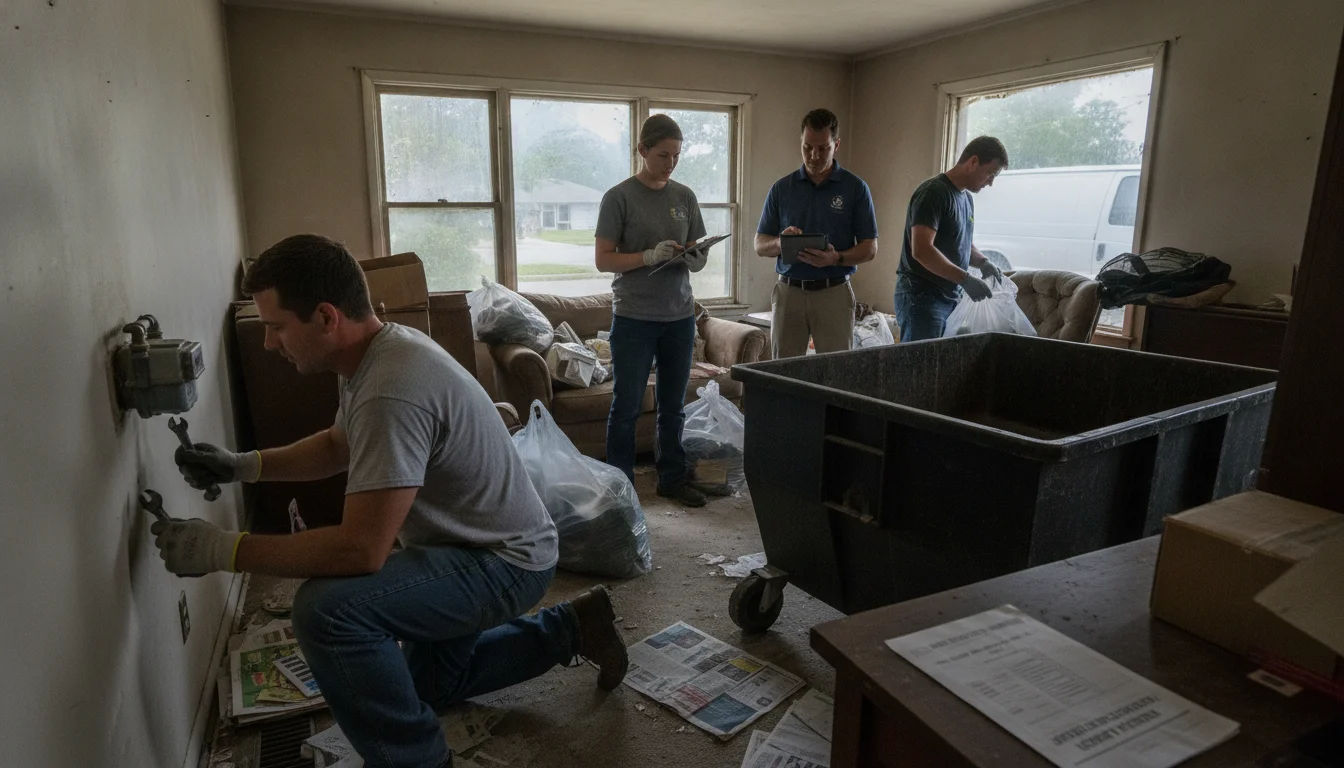
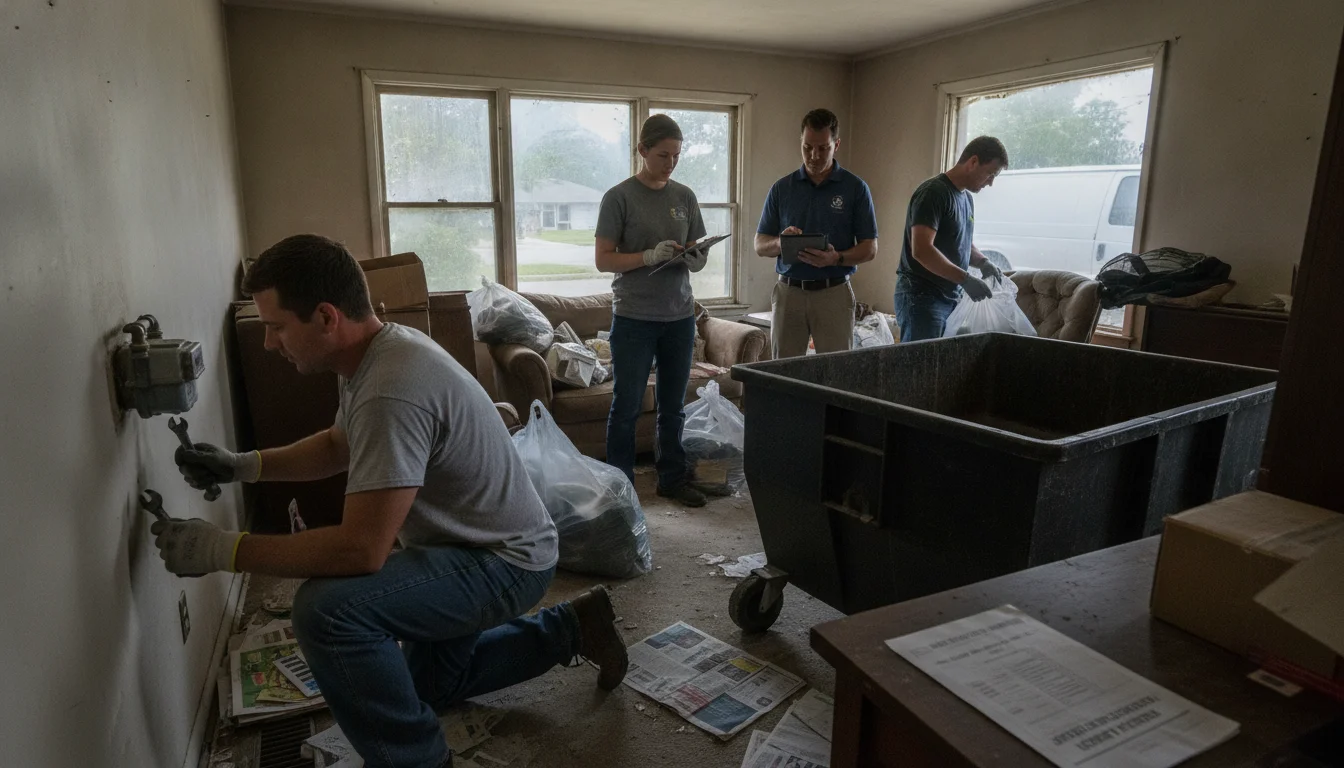
When a repossessed home is left in a hurry—food in the fridge, mail on the floor, a garage stacked with boxes—a foreclosure cleanout service steps in to restore order. Put simply, a foreclosure cleanout service is a full property cleanup that removes abandoned items, debris, and hazards inside and out, then leaves the space broom-swept and ready for photos, showings, or repairs. In Loveland, banks, REO agents, and investors rely on experienced local crews to move quickly and work safely, so they can turn properties faster.
In brief, this guide explains what a complete cleanout covers, how the process is planned and executed, and what deliverables help you document results in Loveland and the broader Colorado market. You will see the standard inclusions, add-on services for complex conditions, a practical day-of workflow, and the key factors that shape costs and scheduling.
Key Takeaways
- A foreclosure cleanout service clears junk, debris, and hazards, then broom-sweeps interiors so properties are show-ready.
- Crews follow safety and compliance practices (EPA household hazardous waste, OSHA HazCom) and adapt to local Loveland rules.
- Standard services cover sorting, hauling, donation/recycling where available, and photo documentation.
- Add-ons like light demolition, biohazard handling, board-up, and winterization address complex or unsafe conditions.
- Clear scope, access details, and disposal requirements shape timelines and planning.
Table of Contents
- Foreclosure Cleanout Service Basics: What It Covers and Who Needs It
- Pre-Cleanout Assessment and Compliance Checklist
- Standard Inclusions: Junk Removal, Debris Hauling, and Sorting
- Specialized and Add-On Services for Complex Properties
- Workflow, Crew Roles, and What to Expect on Cleanup Day
- Pricing Models and Cost Factors Explained
- Deliverables That Make a Property Market-Ready
- Frequently Asked Questions
- Key Takeaways
- Conclusion
Foreclosure Cleanout Service Basics: What It Covers and Who Needs It
A foreclosure cleanout service is a step-by-step cleanup of a repossessed home, condo, or compact commercial space. Crews remove abandoned belongings, trash, and loose debris. Items are sorted for disposal, donation, and recycling when available. The outcome is a safe, show-ready environment that can pass a basic visual check.
Properties range from lightly cluttered to unsafe. Some are just dusty; others have spoiled food, broken glass, or sharp metal. Exterior areas might include tires, pallets, or storm debris. Vacant structures can attract pests, and basements may show water damage. The plan adapts to the on-site conditions.
Who uses it? Banks and servicers need fast turnover on REO (real estate owned) assets. REO agents and brokers want clear photos and tidy rooms for showings. Investors need clean shells for rehab. Property managers push for quick unit turns. Heirs handling an inherited property may need help clearing full homes. Local businesses sometimes request similar support for storage rooms or offices left in disarray.
Work often connects to related services. Estate Cleanout can help families sift keepsakes before a sale. Eviction & Foreclosure Cleanout supports landlords after difficult move-outs. House Cleanout fits a whole-home reset. Attic & Basement Cleanout focuses on hard-to-reach spaces.
What makes it different from basic junk pickup?
Basic junk pickup removes a handful of items. A foreclosure cleanout is broader and carefully staged. It covers every room and exterior areas, builds in sorting and simple site care, and ends with a broom-swept finish. The space is not only emptied; it is organized so the next trade can start quickly.
Loveland Colorado Junk Removal works across Loveland every week clearing bank-owned homes, investor flips, and tough move-outs. The crew manages tight timelines with steady, careful work.
Pre-Cleanout Assessment and Compliance Checklist
Before lifting a box, the team completes a site review. They verify access, lock status, and alarm codes. Utilities are tested or tagged, leaks and hazards are noted, and photos capture start conditions. A simple plan defines work zones, travel routes, and safety notes to keep the day organized and safe.
Safety protocols matter. Teams scan for chemicals, sharps, and mold. If they find suspect materials, they isolate and label them. Many common items count as household hazardous waste, including paints, oils, and certain cleaners. Proper handling follows guidance from the Environmental Protection Agency on household hazardous waste EPA HHW.
If crews handle chemicals or dusty rooms, they apply labels and training aligned to OSHA’s Hazard Communication Standard (OSHA HazCom). Appropriate personal protective equipment (PPE) such as gloves, masks, and eye protection is used as needed. If a space feels unsafe, work pauses and the plan is adjusted.
Rules vary by city or county. Some jurisdictions require certain items to be recycled; others outline bulk pickup requirements. Crews confirm landfill rules and hours. When unclear, they contact local offices before hauling to avoid delays or fines.
Occupancy and legal status
Teams confirm the space is vacant and lawful to enter. If locks need replacement, that is documented. For bank-owned homes, REO managers may provide a property preservation order. HUD-owned properties follow their own process, and agents often use guidance from the HUD REO program (HUD REO).
Standard Inclusions: Junk Removal, Debris Hauling, and Sorting
Most projects begin with a walkthrough. Crews identify fast wins first: open floors, bagged trash, and lighter items. Next, they plan heavy moves for appliances, couches, dressers, and office desks. Sorting happens in real time. Items suitable for reuse may go to donation, and metals and cardboard move to recycling when accepted locally.
Interior work spans kitchens, baths, bedrooms, and halls. Crews empty fridges and pantries. They remove small fixtures only upon request, such as curtain rods or loose shelves. Large appliances that fail or are unsafe are hauled away. Door frames and floors are protected with pads or runners during moves.
Garages and sheds typically hold tools, paint, bikes, and bins. Teams stage these outdoors to sort. Tires, scrap wood, and e-waste follow special disposal streams. Crews observe local drop-off rules. Mattresses are common; many facilities limit them, though recycling options are expanding. The Mattress Recycling Council operates programs in various states (see Mattress Recycling Council programs for availability).
Outside, crews collect yard trash, storm limbs, and loose debris. Salvaged pavers or bricks may be stacked. Fences, gates, and sheds are checked for safety. If an empty shed is unsound, light demolition can be added upon request.
What is usually included by default
- Removal of loose junk and bagged trash
- Haul-away of standard furniture and non-working appliances
- Basic sorting for donation and recycling where available
- Sweep-out of floors and steps after removal
- Photo notes of before-and-after conditions
Specialized and Add-On Services for Complex Properties
Some properties require more than a standard sweep. Hoarding situations bring large volumes, narrow access lanes, and potential biohazards. Crews slow the pace, widen paths, and set clear staging zones. Labels identify save, donate, and discard to protect what matters while maintaining progress.
Biohazard work may involve bodily fluids, needles, or certain animal waste. These require trained handling, sealed containers, and specialized disposal. Teams may coordinate with licensed biohazard vendors for compliant transport. To control pests, items are wrapped to avoid spreading bugs, and areas may be treated before moving begins.
Light demolition is helpful when fixtures are broken or unsafe. By request, crews can remove sagging cabinets, torn carpet, or damaged drywall. Lines are capped as needed and debris is contained. Yard cleanup can extend to brush trimming, weed clearing, and removing unstable fence panels. Board-up secures broken doors and windows. Winterization protects plumbing by shutting off, draining, and adding antifreeze in traps per property guidelines.
When to add specialized help
- Strong odors, visible mold, or standing water
- Rodent signs, bed bugs, or nests in furniture
- Lots of sharps, chemicals, or unknown liquids
- Collapsed sheds, unsafe stairs, or broken glass walls
- Code notices that need proof of correction
These add-ons protect people and prevent damage. They also help properties pass reviews by lenders, municipalities, or buyers. Loveland Colorado Junk Removal can coordinate extras with trusted partners so work continues without unnecessary pauses.
Workflow, Crew Roles, and What to Expect on Cleanup Day
A smooth cleanout follows a straightforward plan. First comes staging. Crews set a safe path from each room to the truck, protect floors and rails, and assign roles: a lead, inside lifters, outside sorters, and a load-out driver.
Next is sorting and removal. Small trash gets bagged, and hard goods move to the truck. Metals and cardboard are separated into the right bins. Save items and paperwork go into marked totes. Valuables—such as cash, jewelry, deeds, and photos—are tracked by the lead and handed to the client or agent.
Heavy items come last unless they block exits. Teams use sliders, dollies, and straps, lift with care, and work in pairs. Doors are pinned open when safe. If a door must be removed, hinges are labeled and screws are secured together. The aim is a quick, damage-free move.
The crew keeps notes. They capture before-and-after photos in each room, record load counts and disposal sites, and note any leaks, wiring issues, or pest signs. This becomes a simple report that supports repairs, listings, or property preservation records.
Typical timeline by phases
- Arrival and safety check: 15–45 minutes
- Staging and protection: 20–60 minutes
- Main removal and sorting: several hours or more
- Final sweep and photos: 20–40 minutes
- Client walk-through: 10–20 minutes
Loveland Colorado Junk Removal keeps communication clear during each phase so clients know what is complete and what comes next.
Pricing Models and Cost Factors Explained
Every job is different because no two properties match. Costs vary with load size, access, and time on site. Crews often consider volume, labor effort, and local disposal rules. Certain items, like tires or fridges with coolant, require special handling. Permits may apply for specific demolition tasks.
Volume refers to space taken in the truck. Access can add time: third-floor walk-ups, long hauls from a backyard, tight alleys, or low carports can slow loading and limit truck options. Elevators might need protective pads or an escort. These details shape the plan.
Labor depends on sorting needs and the care level required. Hoarding, biohazards, or careful save-and-hold steps add time. Disposal considerations come from landfills and transfer stations; some facilities add surcharges for mattresses, electronics, or appliances. Local rules dictate which sites accept certain materials.
What an estimate may include
- Scope of rooms, floors, yard, and outbuildings
- Load size or projected truck volume
- Labor hours and number of crew members
- Disposal, recycling, or special handling line items
- Add-ons like light demo, board-up, or winterization
Clear notes reduce confusion. If something is out of scope, it should be spelled out. Clients can also ask about related options—such as Eviction & Foreclosure Cleanout or House Cleanout—when planning future work.
Deliverables That Make a Property Market-Ready
The goal is simple: a property that looks clean and safe at a glance. Crews sweep hard floors and steps, wipe any obvious spills made during removal, and secure doors and windows. Loose nails or sharp edges in debris are removed, and any saved items are stacked in one safe area.
Photos allow owners, agents, and lenders to see results. Crews take clear, wide shots of each room and the yard, along with close-ups that call out needed repairs such as a broken rail or a soft wall. Haul tickets or receipts document where materials went—useful for records and to meet local standards.
A final walk-through confirms the scope. The lead checks closets, cabinets, attic accesses, and crawl doors. Keys are tested. Any punch-list notes are recorded, like a loose hinge or a cracked pane discovered during work. Upon request, the team can suggest vendors for follow-on repairs.
Turnover-ready checklist
- Clear floors and paths in every room
- All trash and loose debris removed
- Appliances handled per scope
- Broom-swept finish in main areas
- Before-and-after photos and haul records
With these boxes checked, the property is set for listing photos, appraisals, or contractor bids. If this is part of a larger plan, Estate Cleanout or Attic & Basement Cleanout can be scheduled next to maintain momentum.
Frequently Asked Questions
What does a foreclosure cleanout service include?
A standard service removes junk, furniture, and debris inside and outside, sorts items for donation and recycling where feasible, and leaves a broom-swept finish. Crews may offer add-ons like light demolition, yard cleanup, board-up, or winterization. Photos and simple reports are often included for agents and owners.
How long does a typical cleanout take?
Many smaller homes can be completed in a day. Larger properties, hoarding cases, or jobs with sheds and heavy items can take longer. Timelines depend on volume, access, and any add-on services. A pre-visit or clear photos help set expectations before work begins.
Can you remove appliances, hot tubs, and heavy items?
Yes. Crews manage heavy items with the right tools and planning. Appliances, sofas, safes, and even hot tubs can be removed when access allows. Some items need special handling. The team plans routes, protects surfaces, and manages disposal requirements for items with coolants or electronics.
How do I get rid of a mattress near me?
Mattresses are common in cleanouts. Many landfills limit them, but recycling programs exist in some regions. Ask about pickup during your service or use local drop-off options. You can also search for a nearby program or a recycling center that accepts mattresses.
Are there options for whole-house cleanouts?
Yes. Whole-house service covers every room, the garage, and outdoor areas. It includes sorting, haul-away, and a broom-swept finish. For inherited homes or major resets, consider Estate Cleanout, House Cleanout, or Eviction & Foreclosure Cleanout to match your situation.
Key Takeaways
- A foreclosure cleanout service clears junk and hazards, then leaves a broom-swept space for listings or repairs.
- Add-ons like biohazard handling, light demolition, and board-up support complex jobs.
- A clear workflow, thorough photos, and haul records help speed turnover.
- Scope, access, and local disposal requirements shape timelines and planning.
Conclusion
Cleanouts move faster when the plan is clear and the crew is prepared. Loveland Colorado Junk Removal serves banks, agents, investors, and owners with steady, careful handling that readies properties for the next step. Need help getting a foreclosed property in Loveland market-ready? Contact us.
If you are not sure which of these you are dealing with, it is worth having someone look at it before it turns into a bigger job. Get in touch with Loveland Colorado Junk Removal today and we will tell you where you stand.