Couch removal FAQs help you understand what affects pickup, how the process works, and what happens after removal. The main concerns are couch size, access, labor, timing, donation, and disposal. Clean furniture may be reused, while damaged or heavy couches need careful handling and a suitable disposal plan.
Table of Contents

- How much does couch removal cost?
- What types of couches can be removed?
- How does professional couch pickup work?
- How quickly can a couch be picked up?
- Can an old couch be donated?
- How are unwanted couches disposed of?
- Can a couch be removed from an apartment or office?
- Can a couch be removed if it will not fit through the door?
- What should you do with a couch before removal?
- What should you look for in a couch removal service?
- Frequently Asked Questions
- Key Takeaways
- Conclusion
How much does couch removal cost?
Couch removal costs depend on the work needed, not only the couch. A small sofa on the ground floor is often simpler than a large sectional in an apartment. Size, weight, stairs, elevators, walking distance, labor, and disposal needs all affect the final quote.
The provider should review the couch and access details before confirming the cost. Clear details can help prevent delays and confusion. Photos may also help the removal team understand the job before setting a pickup time. The final cost is confirmed on a quote after the details are reviewed.
What factors affect the cost of removing a couch?
The main factors are the couch type, its condition, and the path outside. A sleeper sofa may weigh more because it has a metal bed frame. A sectional may need more work because it has several parts. Wet, torn, or badly soiled furniture may need a different disposal plan.
Access also matters. Long halls, stairs, elevators, narrow doors, and crowded rooms can add work. The distance from the couch to the truck may change how the crew plans the pickup. Urgent scheduling may also affect the work plan. The final cost is confirmed on a quote after the provider reviews these details.
How does couch removal compare with other bulky furniture jobs?
A couch may need about the same type of work as a mattress, dresser, or large table. A small loveseat may be easier to move than a full sectional. A heavy wood dresser may need more effort than a light sofa. The best comparison depends on size, weight, access, and disposal needs.
Loveland Colorado Junk Removal helps Loveland property owners understand which details matter before pickup. This makes it easier to compare couch removal with other furniture removal work. The item name alone does not show how hard a job will be.
What types of couches can be removed?
Most removal providers handle common home and business seating. This may include sofas, loveseats, sectionals, futons, recliners, sleeper sofas, and other large upholstered furniture. The provider should know the couch type before arrival. This helps the crew plan a safe way to move it.
A couch does not need to be in perfect shape for removal. Many people need help with furniture that is broken, stained, old, or too large for regular trash pickup. The crew can explain whether the item may be donated, recycled, reused, or sent for disposal.
Can sofas, loveseats, sectionals, and sleeper couches be picked up?
Yes, these furniture types can often be picked up as part of couch removal. Sectionals may be split into smaller sections before moving. Sleeper sofas may need extra care because their frames and bed parts can be heavy. Recliners may also need careful handling around walls and doors.
Describe the couch clearly when arranging service. Useful details include the number of pieces, its size, the material, and its location. A photo can help when the couch is very large or sits in a difficult area.
Are oversized or damaged couches accepted?
Many companies accept oversized and damaged couches, but the crew needs to know about them first. A couch with broken legs may shift during moving. A wet couch may be unsafe to carry through a home. Badly damaged furniture may also have fewer donation or recycling choices.
Mention stains, water damage, pests, sharp parts, or weak frames. Honest details protect the crew and the property. They also help the provider choose the right removal and disposal plan.
How does professional couch pickup work?
Professional couch pickup usually starts with a review of the item and its location. The crew protects the path, moves the couch, loads it, and leaves the area clear. Each provider may use a different process, but good planning helps prevent damage and wasted time.
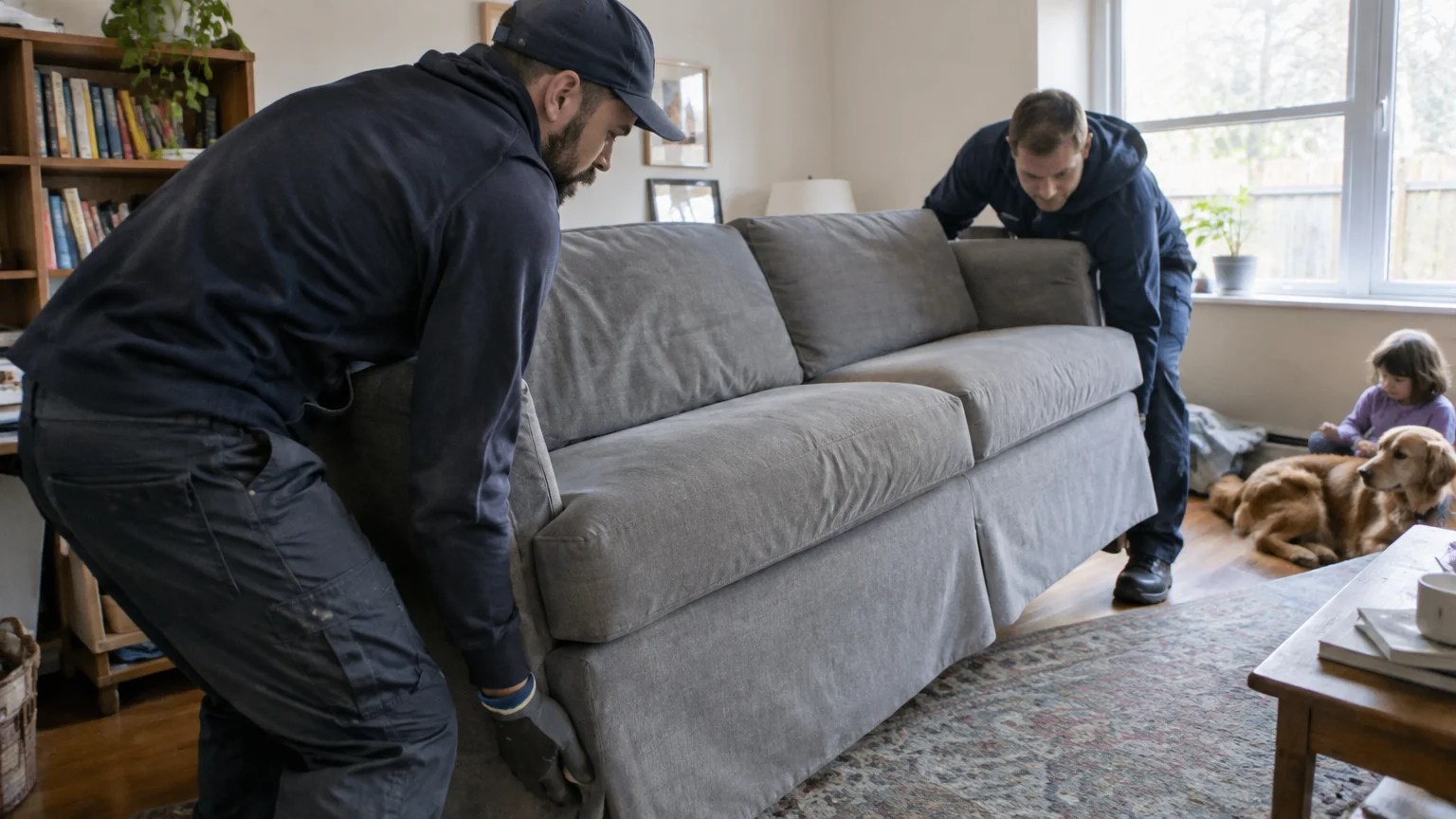
The owner usually does not need to carry the couch outside. This is one reason people use a full-service junk removal company for large furniture. The crew handles the heavy lifting while the owner gives access and clear instructions.
What should you do before the removal crew arrives?
Clear blankets, cushions, toys, clothing, and items stored under the couch. Open the walkways as much as possible. Move breakable decorations away from the route. Tell the crew about locked gates, parking limits, or building check-in rules.
A short preparation list can help:
- Remove personal items from the couch and nearby floor.
- Clear a safe path from the furniture to the exit.
- Keep pets in a separate room during the visit.
- Move fragile items away from corners and halls.
- Share stairs, elevators, gates, and parking details early.
How are couches moved safely out of a property?
Crews may use lifting straps, furniture blankets, dollies, and careful hand placement. They may tilt, turn, or separate a couch when the route requires it. The crew should protect walls, floors, doors, and railings during the move.
Safe removal depends on teamwork. One person can guide the route while others support the couch. Rushing may damage property or cause injury. Homeowners should not help lift a heavy couch unless the crew asks them to do so safely.
How quickly can a couch be picked up?
Pickup timing depends on the provider’s schedule, location, couch details, and access plan. Some jobs can be arranged soon, while others need more planning. A specific time cannot be promised until the company checks availability and job needs.
Local service may reduce travel time, but it does not promise same-day pickup. Busy periods, bad weather, building rules, and large furniture loads can affect scheduling. Clear details often make it easier to find a suitable appointment in Loveland.
What affects couch removal scheduling?
The biggest factors are crew availability, travel distance, item size, and property access. A couch in a ground-level home may be easier to schedule than a sectional inside a managed building. Elevator reservations and loading rules may limit open time slots.
Share your preferred timing and any deadline. A move-out date, office change, or property turnover may need careful planning. Early contact gives the provider more time to match the job with an open schedule.
Can furniture be removed during an office or home move?
Yes, couch removal can often be planned during a move. Removing unwanted furniture before movers arrive can clear space and reduce confusion. In an office, removing old lounge furniture can create room for new equipment or a new layout.
Coordinate the removal with movers, building staff, and other workers. Identify the couch clearly so the wrong item is not taken. A separate access plan can keep removal work from blocking the moving crew.
Can an old couch be donated?
An old couch may be donated when it is clean, safe, complete, and usable. Donation centers set their own rules, so acceptance is never automatic. Many groups will not take furniture with major stains, tears, odors, pests, or serious damage.
Check donation rules before arranging transport. A removal company may help judge whether an item seems ready for reuse, but the donation center makes the final choice. Photos and honest condition details can save time.
What condition does a couch need to be in for donation?
A donation-ready couch should be clean, dry, stable, and free from serious damage. Cushions should be present when they belong to the original design. The frame should support normal use. The fabric should not have strong odors or signs of pests.
A couch that is old but sturdy may still help another household. A couch with small wear marks may be accepted in some areas. Do not hide damage or contamination. Donation groups need safe items they can offer to others.
What should you do if donation centers cannot accept it?
If donation is not possible, the couch may still have other responsible options. Some materials may be recovered. The couch may also go to a local transfer station or disposal facility. The right choice depends on its materials, condition, and local rules.
A removal provider can explain the next step before pickup. This is often easier than leaving the couch beside a home or office dumpster. Regular trash service may not accept large upholstered furniture. Illegal dumping can create safety and environmental problems.
How are unwanted couches disposed of?
Unwanted couches may be donated, reused, taken apart, recycled in part, or sent to an approved disposal facility. The best option depends on the couch and the facilities available in the service area. Responsible removal means choosing a realistic path for each item.
Couches contain several materials. These may include fabric, foam, wood, metal springs, plastic parts, and fasteners. Separating materials may allow some recovery. However, not every facility accepts every couch part.
What happens to a couch after pickup?
After pickup, the couch goes to a location chosen through the provider’s disposal plan. Usable items may go to donation or resale partners. Damaged furniture may be taken apart or delivered to a facility that accepts bulky waste.
Ask how the company handles donation and disposal. A responsible provider should explain the process clearly. It should not claim that every couch is recycled when its condition or materials make that unlikely.
Which couch materials may be reused or recycled?
Metal springs and some wood parts may have recovery value. Clean cushions or fabric may sometimes be reused. Foam and mixed upholstery are harder to process because they combine several materials. They may also be dirty or damaged.
Recycling depends on local facility rules. Do not take apart a couch at home unless you can do so safely. Sharp springs, staples, and heavy frames can cause injuries. Professional handling is often safer for large or damaged furniture.
Can a couch be removed from an apartment or office?
Yes, a couch can often be removed from an apartment, office, condo, or managed property. The owner must share access details and follow building rules. Some properties require advance approval, a service elevator, a loading window, or proof of insurance.
The building manager may need to reserve an elevator or protect shared areas. The removal crew may also need a parking space close to the entrance. Planning these details early can prevent a failed visit.
What access details should be shared before pickup?
Tell the provider the floor, entrance, elevator location, stair count, halls, and parking conditions. Mention locked doors, security desks, loading docks, gates, and time limits. These details affect how the crew prepares.
Explain whether the couch is in a private room, shared lounge, office suite, or storage area. A photo of the item and entry path may answer questions faster than a long description. Accurate information supports safer planning.
How can building rules affect furniture removal?
Building rules may control when large furniture can leave the property. Some managers require a service elevator reservation. Others limit truck access or allow removal only during certain hours. A building may also require floor and wall protection.
The tenant or owner must check those rules. The removal company can follow instructions, but it may not be able to get permission for the property. Share building approval details before pickup to help prevent delays.
Can a couch be removed if it will not fit through the door?
A couch may still be removable when it will not fit through the main door. The crew can check other paths, remove legs, separate sections, or turn the frame carefully. In some cases, the couch must be taken apart. That choice depends on its design and condition.
Never force a couch through a doorway. Pressure can damage walls, doors, trim, floors, or the couch. A professional check is safer than guessing.
When might a couch need to be disassembled?
Disassembly may help when a couch has removable legs, arms, backs, or sectional connectors. Sleeper sofas and recliners may have moving parts that need care. Some frames are built as one piece and cannot be separated without damage.
Do not cut or break the couch before pickup. Hidden springs, staples, screws, and metal parts can create hazards. A trained crew can decide if careful disassembly is practical and how to handle the parts afterward.
How do stairs, narrow halls, and elevators affect removal?
Stairs and narrow halls make the route harder. The crew may need extra room to turn the couch or protect walls. An elevator may have a weight limit or need a reservation. Long carries can also affect the labor and time needed.
Measure tight doors when possible and share the details early. Remove loose rugs and nearby objects. A clear route gives the crew more control and lowers the chance of property damage.
What should you do with a couch before removal?
Before removal, empty the couch and clear the area around it. Remove cushions, blankets, toys, remote controls, and items stored underneath. Check hidden spaces so personal belongings are not left behind.
Preparation is simple, but it makes pickup safer. A clear room helps the crew inspect the couch and choose the best route. It also protects children, pets, and fragile household items.
Which items should be removed from inside and around the couch?
Remove personal items from the cushions, storage areas, and nearby floor. Books, chargers, small electronics, coins, pet toys, and clothing can be missed. Move artwork, lamps, tables, and decorations near the route as well.
Food, liquids, and sharp objects should not stay inside the couch. They can spill or cause injury during lifting. If the couch has a built-in bed, check the frame and storage space before pickup.
How can you prepare pets, children, and walkways for pickup?
Keep pets and young children away from the work area. A separate room with a closed door is usually safest. Walkways should be free of clutter, wet spots, loose cords, and small items that could cause a trip.
Outdoor paths need attention too. Unlock gates when appropriate, clear snow or leaves, and keep vehicles away from the loading area. These small steps help the crew work safely and keep the home calm.
What should you look for in a couch removal service?
A good couch removal service should explain its process and confirm the item details. It should use safe handling methods. It should also give clear information about access, timing, donation, recycling, and disposal.
Loveland Colorado Junk Removal serves property owners who need practical furniture removal help and nearby areas. A local provider may understand common home, apartment, and office access concerns. Each job still needs a clear review.
Which questions help you compare removal providers?
Useful questions focus on the work, not only company claims. Owners can ask:
- Does the service remove sofas, sectionals, sleeper couches, and recliners?
- Can the crew handle stairs, elevators, narrow halls, and gated properties?
- What should the owner prepare before the crew arrives?
- How are usable and damaged couches handled after pickup?
- When is the final cost confirmed on a quote?
- Are building rules or loading instructions needed before scheduling?
The answers should be direct and easy to understand. A provider that avoids basic questions may not be the right fit. Written job details can help both sides agree on the work.
Why do responsible disposal practices matter?
Responsible disposal keeps large furniture out of unsafe places. It can also give usable items another purpose. Some materials may be recovered when local facilities allow it. Dumping a couch beside a road, vacant lot, or full dumpster can create hazards and local penalties.
The right provider should match the couch with a realistic next step. Donation is useful when the item is safe and usable. Recycling may help with certain materials. Disposal is sometimes needed for wet, contaminated, or badly damaged furniture.
Frequently Asked Questions
Can a couch be placed beside the curb for regular trash pickup?
It depends on local collection rules. Many regular trash programs do not accept large upholstered furniture. Some require advance arrangements. Leaving a couch at the curb without approval can violate local rules or block a walkway. Check the local program or arrange bulky item removal through a qualified provider.
How do people get rid of a couch that is still usable?
A clean, stable couch may be donated, sold, given away, or passed to a reuse group. Describe its condition honestly and confirm that the recipient can accept it. If no reuse option is available, a removal company can explain disposal choices.
Can a junk removal company take a couch and a mattress together?
Many providers handle both items during one visit, but they should know about each item before scheduling. Mattresses may have different donation, recycling, or disposal rules. Sharing the full item list helps the crew plan space, labor, and next steps.
Is it safe for a homeowner to move a couch alone?
Most large couches are awkward and heavy. Moving one alone can cause injury or property damage. A homeowner can clear the room and remove small items, but heavy lifting is usually better left to a trained crew. This is especially true for sleeper sofas, sectionals, stairs, and tight doors.
What are couch removal FAQs most useful for?
Couch removal FAQs help owners understand the process before scheduling service. They cover item types, access, timing, donation, disposal, and preparation. They also show which details a provider needs to confirm the job. Clear answers help owners choose a safe and practical option.
Key Takeaways
- Couch removal costs depend on the work involved, including size, weight, access, labor, and disposal needs.
- Most sofas, loveseats, sectionals, sleeper couches, and recliners can be reviewed for pickup.
- Donation is possible only when a couch is clean, safe, dry, and usable.
- Apartment and office removal may need elevator reservations, loading rules, or building approval.
- Owners should clear the couch, protect the route, and share access details before pickup.
Conclusion
Couch removal is easier when the owner shares clear details from the start. The couch type, condition, location, access route, and preferred timing all help shape the plan. Donation may work for clean furniture, while damaged items may need recycling or approved disposal.
Loveland Colorado Junk Removal can help homeowners, landlords, office managers, and business owners review options for unwanted couches. Contact us to arrange a couch pickup and discuss the right next step for the property.