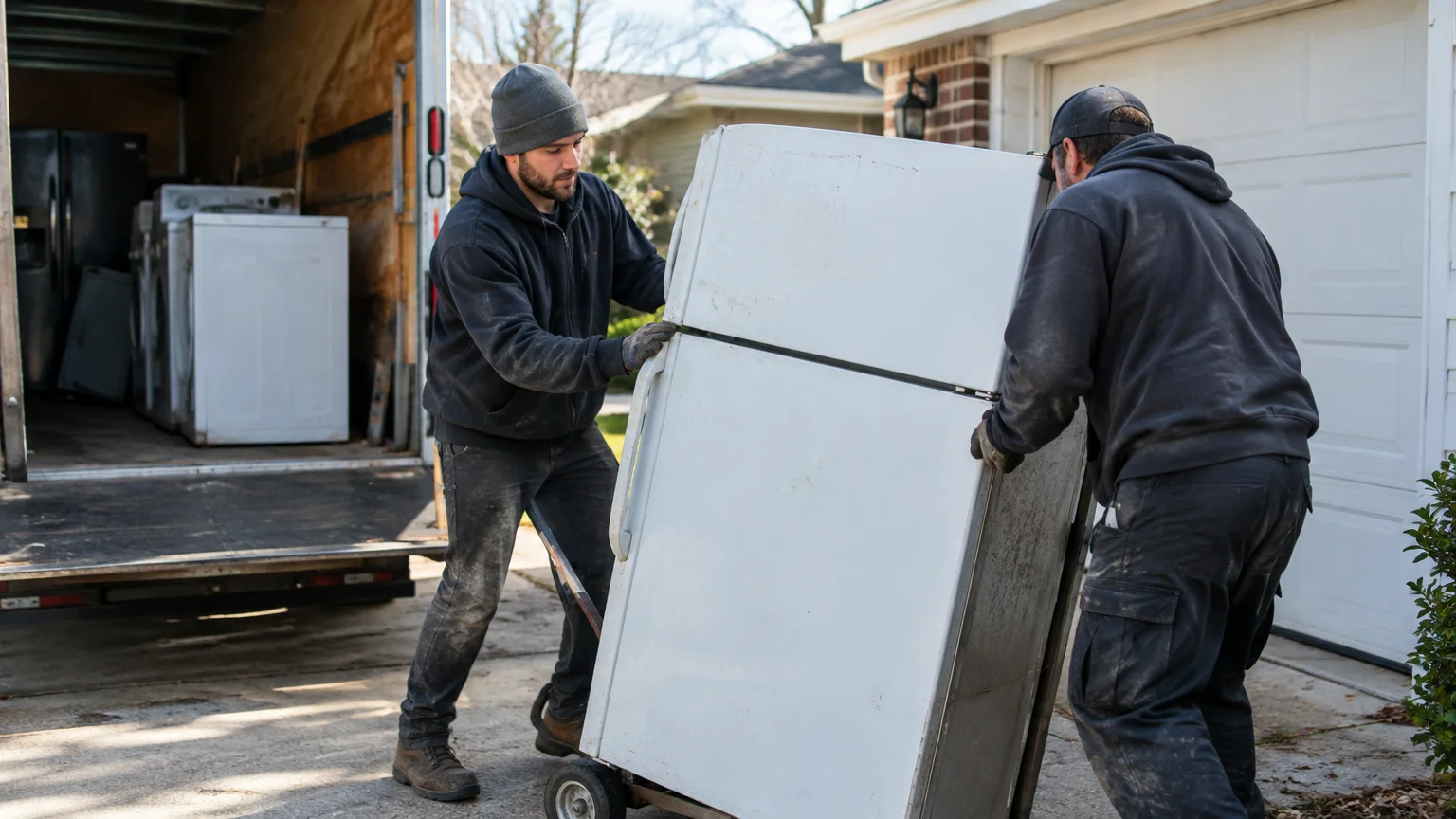
Appliance pickup FAQs explain what can affect a quote, how collection works, and how to prepare safely. For Loveland homeowners, appliance pickup depends on the item, its condition, and how easy it is to reach. A local appliance removal service can also explain possible reuse or recycling options before collection.
An old refrigerator, washer, or dryer can take up useful space. These large items can also be hard to move safely without help. Loveland Colorado Junk Removal helps Loveland homeowners understand the steps for removing bulky appliances. Knowing what to ask can make pickup day easier.
How much does appliance pickup cost?
The final quote depends on the appliance, its size, and its condition. Access matters too. A small appliance near an easy exit is often a simpler job than a large refrigerator upstairs. The provider confirms the final cost in a quote after reviewing the job details. Each business sets its own pricing.
What factors affect the cost of removing an appliance?
Several details can affect the work involved. The provider may ask which appliance needs removal, if it still works, and where it is located. Stairs, narrow halls, tight doorways, or a long path to the truck can make moving it harder. Other items that need to be moved may also affect the job.
The appliance’s condition matters as well. A broken unit may have loose parts or sharp edges that need extra care. Refrigerators and freezers are large and can need careful handling. Sharing these details when you arrange pickup helps the team plan how to remove the item.
A quote should match the work the provider has been asked to do. You can ask what the quote covers and whether adding another appliance changes the job. You do not need to guess about the work or agree before you understand the plan. Clear details help everyone know what to expect.
How does appliance pickup compare with other household junk removal?
Picking up one appliance is often a simpler job than clearing a whole home. Still, its weight and location can change the work. A washer near an easy exit may be easier to move than a refrigerator in a tight space. A full household junk removal job may include many kinds of items and more sorting.
Some people compare appliance pickup with other services or ask which option fits their needs. The answer may depend on the appliance, local programs, or a retailer’s current services. Pickup choices vary, and not every provider takes every item. Ask what applies before arranging removal. Do not assume every service accepts your item or covers your area.
People looking into office cleanout FAQs, retail removal FAQs, or house cleanout FAQs may also need to ask what items are included. These jobs can involve more than appliances. It helps to name each item and explain what should stay. A clear request makes it easier to plan the right kind of pickup.
What happens to appliances after pickup?
After pickup, an appliance may go for reuse, donation, recycling, or another suitable form of disposal. The next step depends on its condition, its type, and what local places accept. Loveland Colorado Junk Removal can explain the handling plan before the team takes the item.
Which appliances may be recycled or donated?
A working appliance in usable condition may be right for reuse or donation. This depends on the item and the rules of the group receiving it. A clean, working microwave may be easier to pass on than a damaged unit with missing parts. Donation groups may also have rules about age, safety, and pickup.
Appliances that cannot be reused may have parts or materials that local recycling programs accept. Rules can differ by appliance and location. Do not assume every appliance belongs in regular curbside recycling. Refrigerators, freezers, washers, dryers, ranges, and dishwashers may each need a different next step.
When asking about appliance removal, ask whether the provider checks for reuse or recycling options. You can also ask what happens if the appliance is broken or a local program will not accept it. A clear answer helps you understand the plan. It also avoids promises about where every item will go.
Why do refrigerators and other appliances need special handling?
Large appliances can be heavy, awkward, and hard to grip. Refrigerators and freezers may also have parts that need careful handling. Do not drag an old fridge outside or take it apart without knowing what the job involves.
Some appliances may hold water, food, lint, or other leftover material. Empty and clean them when it is safe. This can make handling easier. If an appliance has a damaged cord, exposed parts, or a leak, keep children and pets away. Tell the pickup team before work starts.
Households may ask how to dispose of appliances that still work. Reuse or donation may be possible, but it depends on the item and local rules. A local appliance removal service can explain the options it offers. Ask about any limits before collection.
How should I prepare for appliance pickup?
Empty the appliance, clear a path, and share safety concerns before pickup. You do not need to move a heavy appliance yourself. Simple steps can help the team see the route and plan a safer removal.
Should I disconnect and empty the appliance first?
Remove loose food, clothing, dishes, or other items when it is safe. Defrost a freezer if needed, and keep water from making the floor slippery. Take out loose shelves only if they come out easily and are safe to handle.
Do not disconnect gas lines, fixed wiring, or plumbing unless you know how to do so safely. A qualified person should handle work with gas, wiring, or fixed water connections. If the appliance is still connected, tell the provider when arranging pickup. Ask what must happen before removal.
You can do simple checks yourself. Empty the appliance, remove loose items, and clear the route. You need professional help if disconnection involves gas, fixed wiring, hard plumbing, or another unsafe task. Never cut a cord or force a connection loose to prepare for collection.
How can I make the pickup area safe and accessible?
Clear small items from the route between the appliance and the exit. Move rugs, toys, bins, and anything else that could cause a fall. Keep children and pets away while the team moves the appliance.
Tell the provider about stairs, narrow doors, gates, low ceilings, or tight turns. A short description can help the team plan the move. If the appliance is in a garage or attic, make sure the entry and path are open, well lit, and easy to reach.
Do not try to lift or tilt a heavy appliance alone. It can tip, trap fingers, damage floors, or hurt someone. If the item blocks an exit or sits in a risky spot, explain that when arranging pickup. The team can then plan around it.
What happens on pickup day?
The team checks the appliance and route before moving it. The exact steps depend on the home, the item, and what was agreed on earlier. Point out the appliance and mention any hazards or access limits before removal begins.
How is the appliance removed from the home?
The team may protect nearby floors or walls and use suitable moving tools. They can check the best route through the home. A doorway or tight turn may change the plan. Keep the path clear and stay away from the lifting area.
If the appliance is still connected to plumbing, gas, or fixed wiring, removal may need to wait until a qualified person disconnects it. Do not expect the pickup team to handle unsafe connections unless that work is part of the agreed service. Asking about this before pickup can prevent confusion.
You may also arrange appliance removal during a renovation, move, or larger cleanout. If so, point out which items are included and which should stay. This simple check can help prevent a useful appliance or household item from being taken by mistake.
What should I expect after the appliance is taken away?
After removal, check the area for loose parts, water, or debris. If the appliance came from a garage, laundry room, or kitchen, a quick sweep can leave the space ready for its next use. Ask the team if anything needs attention before they leave.
The provider should explain the next step based on the plan discussed before pickup. Reuse, donation, recycling, and disposal depend on the appliance and local options. You can ask how it will be handled. Keep in mind that a receiving group or facility may have its own rules.
For a larger home cleanout, appliance removal can be one part of the job. Sort other items separately and ask whether the provider handles them. Keeping the request clear helps the team focus on the agreed items. It also makes the next steps easier to manage.
Frequently Asked Questions
How can someone get rid of an old fridge?
Ask a local appliance removal service whether it accepts refrigerators and what preparation is needed. Empty the fridge and remove food or water when safe. Do not disconnect gas, wiring, or fixed plumbing without qualified help. Reuse or recycling depends on the condition and local rules.
Can a broken appliance be picked up?
Many providers can take broken appliances, but acceptance and handling depend on the item and its condition. Tell the provider what is broken, whether it has sharp or loose parts, and where it is located. Keep children away from damaged appliances. Do not take one apart unless it is safe.
What appliance pickup options are available near me?
Local programs, retailers, and providers may offer different pickup options. Some accept only certain appliances or items in usable condition. Ask what the pickup includes, whether your appliance qualifies, and how it will be handled. The final cost is confirmed in a quote after the job details are reviewed.
Do I need to move the appliance outside before pickup?
Usually, you should not move a heavy appliance outside alone. Leave it in place and tell the provider about stairs, tight spaces, or connections. A trained team can check the route and plan the move. If the unit needs disconnection, arrange qualified help for fixed wiring, gas, or plumbing.
Conclusion
Appliance pickup is easier when you know what the provider accepts, clear a safe path, and share concerns early. The final quote depends on the appliance and the work needed. Reuse and recycling depend on its condition and local options. Contact us to arrange appliance pickup with Loveland Colorado Junk Removal.
Key takeaways
- Share the appliance type, condition, and location when arranging pickup.
- Clear a safe path, but do not lift or disconnect risky items yourself.
- Ask what reuse, donation, recycling, or disposal options may apply.
- Review the job details and final quote before removal begins.
If you are unsure what to do with an appliance, ask before moving it. Loveland Colorado Junk Removal can explain the next steps. You can also learn more about the services offered on the Loveland Colorado Junk Removal website.
If you are not sure what you are dealing with, it is worth having someone look at it before it turns into a bigger job. Get in touch with Loveland Colorado Junk Removal today and we will tell you where you stand.