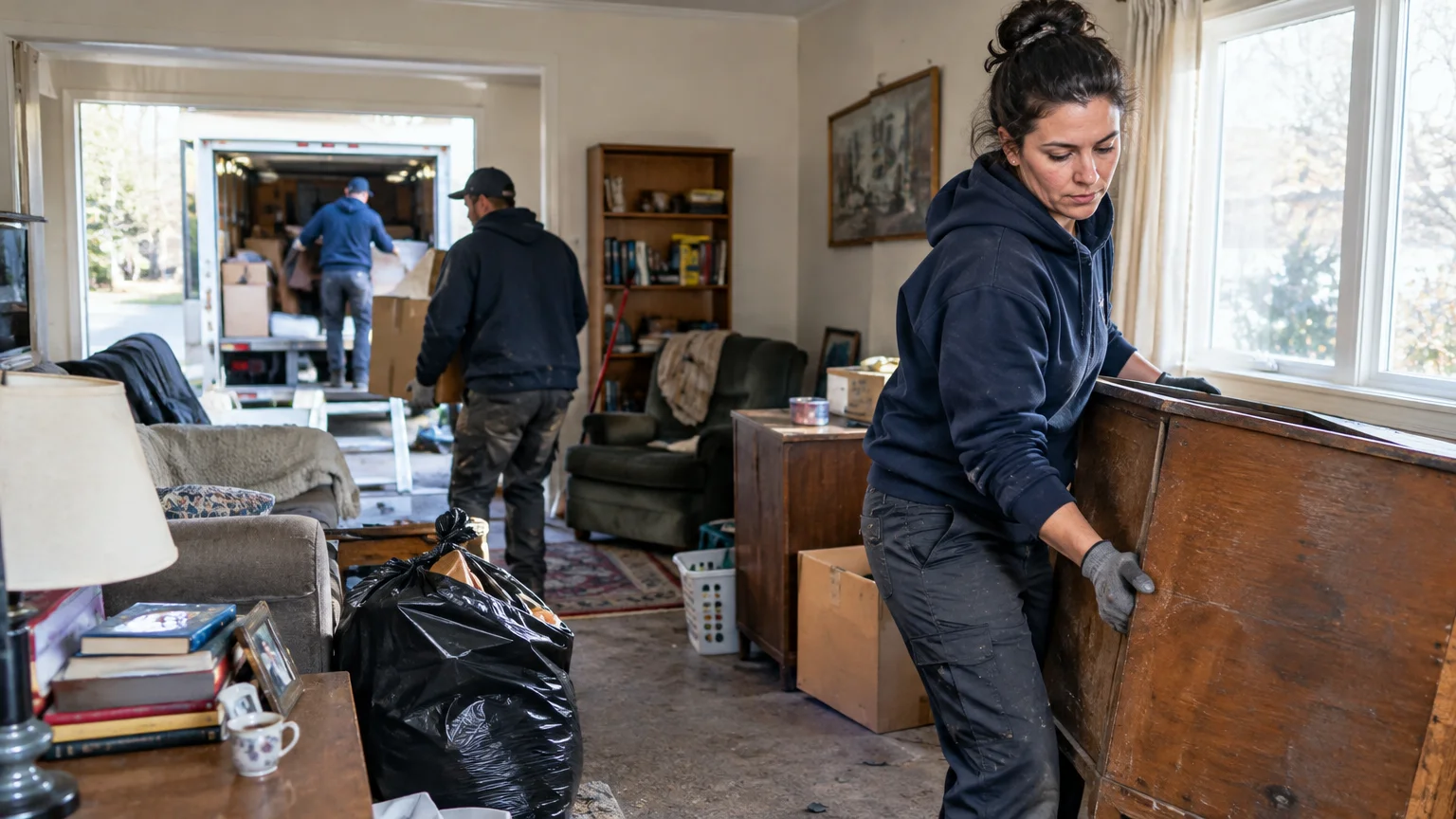
A full house cleanout feels easier when you work one area at a time. Make a simple plan, protect important items, and sort belongings into clear groups. A full house cleanout company can then remove bulky, heavy, or unwanted items that are unsafe or hard to move alone.
What should you do before starting a full house cleanout?
Before you begin, make a room-by-room plan and choose what should happen with each item. A cleanout service can remove unwanted things from a home, but you should protect papers, valuables, and keepsakes first.
Make a simple plan for each area
Walk through the home before carrying anything outside. List each room, attic, basement, garage, shed, and outdoor area that needs work. This keeps the job easy to track and helps you remember small spaces.
Start with a room that has less emotional value. A garage, laundry room, or storage closet may feel easier than a bedroom full of family items. After one area is done, that progress can help you keep going.
Set one clear goal for each work session. One session may focus on a bedroom closet. Another may cover one wall in the garage. Short work periods help you stay focused without feeling worn out.
Gather supplies and protect important items
Useful supplies include strong boxes, bags, labels, tape, gloves, a dust mask, and a marker. A flashlight helps in dark storage areas. A hand truck can help move large items, but use it only on clear, safe paths.
Make a safe place for documents, jewelry, photos, keys, medicine, and other items that should stay. Put them in a marked box or a separate room. Tell family members that this area is off-limits during the cleanout.
A simple process can keep the project moving:
- Walk through the home and list every area that needs work.
- Remove papers, valuables, medicine, and important keepsakes.
- Gather boxes, bags, labels, gloves, and other supplies.
- Choose one small area and finish it before moving on.
- Set large items aside for a later removal plan.
Loveland Colorado Junk Removal can help Loveland homeowners choose a removal option that fits the project. Planning first also makes it easier to explain the job when you arrange local help.
How do you sort household items during a major cleanout?
Sort each item into a clear group before moving it from the home. Common groups are keep, donate, recycle, sell, and remove. Clear labels reduce confusion and help everyone follow the same plan.
Use simple categories that everyone understands
The keep group should hold items that are used, needed, or strongly valued. The donate group may include clean clothing, working household goods, and usable furniture. The recycle group may include paper, cardboard, metal, or some electronics, based on local rules.
A sell group works best for items in good shape that are worth the time needed to list them. A house cleanout sale may move useful items, but it can slow the project. Set a firm deadline. Items that do not sell by then need another plan.
The remove group can include broken furniture, worn mattresses, damaged items, and household junk that cannot be used again. It may also include items that are too large for normal trash service. A full-service junk removal company may collect these items together, depending on local rules and the materials.
Use labels that are easy to read. Colored tape can help, but plain words work well too. Keep each group in its own area so items do not get mixed again.
Handle sensitive and unsafe items with care
Sentimental items may need extra time. You might keep one small memory box instead of every item from a loved one. Photos can be scanned, and family members can choose items before anything leaves the home.
Check items that may have value before donating or removing them. These may include coins, tools, artwork, jewelry, collectibles, and old papers. A qualified specialist may help when the value or history is unclear.
Hazardous items need special care. Hazardous means something that may harm people, property, or the environment. Paint, fuel, chemicals, propane cylinders, pesticides, ammunition, and some batteries may need special disposal. Do not put them in normal trash or load them without knowing local rules. The local solid waste authority can explain approved options.
Appliances also need a plan. Before removing a refrigerator, freezer, washer, dryer, or other large appliance, check whether a qualified person must disconnect it. Items with refrigerant, a cooling chemical, may have special handling rules. Ask the removal provider what it accepts before the appointment.
How can you make a full house cleanout easier and safer?
A cleanout is easier when you move from small items to large ones. Keep paths clear, lift with care, and do not rush. Homeowners can sort and clean simple areas themselves, but heavy lifting and unsafe items may need professional help.
Reduce stress with small, steady tasks
Use the four-box method in small rooms: keep, donate, recycle, and remove. Add a fifth space for items to sell when needed. Do not fill boxes so full that they become unsafe to lift.
Work from high shelves down to the floor. This keeps dust and small items from falling onto clean areas. Keep doors and paths open. Place full bags and boxes in one staging area that does not block exits.
Take breaks and drink water. Good lighting helps you see sharp edges, pests, mold, and water damage. If a room smells unsafe or shows signs of damage, stop work and get the right help.
You do not need a professional for basic sorting, sweeping, labeling, or wiping empty shelves. Professional help is more useful when the job has heavy items, tight stairs, large amounts of junk, or materials that cannot go in normal trash.
Prepare furniture and appliances for removal
Empty drawers, cabinets, and shelves before moving furniture. Check behind and under each piece for papers, coins, medicine, or small valuables. Remove shelves and loose parts only when it is safe and helpful.
For large appliances, clear a path from the item to the exit. Measure tight doorways if needed. Protect floors and walls with suitable covers, but do not drag heavy items. Never try to move a large appliance alone.
A hot tub, sectional sofa, piano, or heavy workbench may need several people and special tools. The same is true for items in an attic, basement, or upper floor. Tell the removal provider about stairs, narrow doors, gates, and long walks to the truck.
Do not cut wires, open sealed systems, break apart appliances, or handle unknown liquids. These actions can cause injury or release unsafe materials. A removal team can explain what it can take and what needs another disposal option.
When should you hire help for a full house cleanout?
Professional help makes sense when a cleanout is too large, heavy, urgent, or emotional for one household. A local junk removal service can reduce lifting and help move unwanted items out in an orderly way.
Know when the project needs extra support
You may want help when several rooms are full, a move-out date is close, or the home has bulky furniture. Estate cleanout service can also help families manage a property after a loss. This may be helpful when relatives live far away or cannot do the physical work.
Professional support may help with narrow stairs, limited parking, heavy appliances, mattresses, building debris, or a large garage pile. It may also help when a homeowner has limited mobility or cannot safely carry items.
The right provider should explain what it accepts and how the crew will reach the property. Ask about appliances, electronics, mattresses, tires, hot tubs, and other unusual items before scheduling. The final cost is confirmed on a quote after the job details are reviewed.
What should homeowners expect from a removal service?
When arranging residential junk removal, share the property location, the areas involved, and the main item types. Clear details help the company prepare for stairs, narrow access, large furniture, appliances, and other special needs.
The crew may review the items and the path before starting. Point out anything that must stay. Keep pets and children away from work areas while items are carried out.
A full-service junk removal company may sort, lift, load, and haul accepted items away. The exact service depends on the provider, local rules, and the materials present.
Loveland Colorado Junk Removal serves homeowners who need organized help with residential cleanouts and nearby areas. Service may cover Downtown Loveland, Mariana Butte, Berthoud, Johnstown, Windsor, Estes Park, and other nearby communities.
Key takeaways
- Plan the home by room before carrying items outside.
- Keep documents, medicine, valuables, and keepsakes separate.
- Sort items into groups for keeping, donating, recycling, selling, and removal.
- Do not move hazardous materials or heavy items without proper support.
- Share access details and unusual items before arranging junk removal.
Frequently Asked Questions
What is a cleanout service?
A cleanout service removes unwanted items from a home, room, garage, attic, basement, or estate. Depending on the provider, the work may include carrying, loading, and hauling accepted items away. Ask what materials the company accepts before booking, especially chemicals, appliances, and unusual items.
How can someone get rid of an old refrigerator?
First, remove food and personal items. Then check whether a qualified person must disconnect the refrigerator. Refrigerators may contain refrigerant and may need special handling. Contact the local waste authority or a removal provider to confirm the proper option before moving it.
What happens to old appliances after removal?
Old appliances may be reused, recycled, donated, or sent to an approved disposal site. The result depends on the appliance condition, its materials, and local rules. Ask whether the provider accepts the appliance and whether it must be emptied or disconnected first.
How can someone get rid of a hot tub?
A hot tub often needs draining, safe disconnection, and careful breakdown before removal. It may need several workers and special tools because of its size and weight. Do not cut electrical lines or move one alone. A qualified removal team can explain a safe plan for the property.
Conclusion
A full house cleanout does not need to happen in one day. A room-by-room plan, simple sorting groups, and safe work habits can make the job feel manageable. When the project includes heavy furniture, appliances, estate belongings, or large amounts of household junk, Loveland Colorado Junk Removal can help reduce the strain.
If you need help with your cleanout, Contact us today to discuss the next step with Loveland Colorado Junk Removal.
If you are not sure what you are dealing with, it is worth having someone look at it before it turns into a bigger job. Get in touch with Loveland Colorado Junk Removal today and we will tell you where you stand.