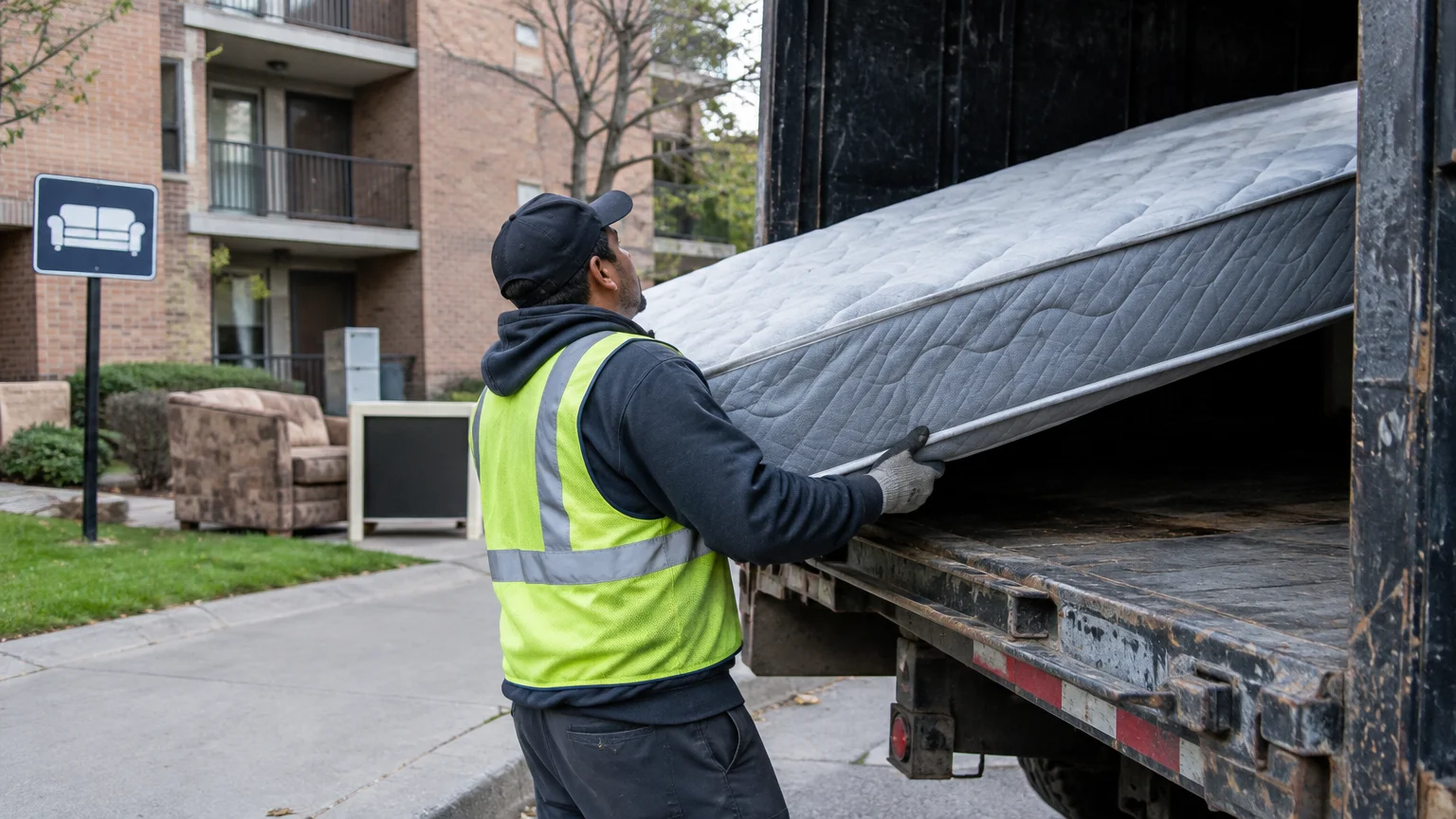
Mattress disposal in Loveland depends on the mattress’s condition, local collection rules, and how you can move it. A clean mattress may be accepted for donation or reuse, while a worn one may need recycling or hauling. Check the rules before moving it, and keep stained or pest-affected mattresses covered and contained.
Table of Contents
- What are the best ways to dispose of a mattress?
- Can you donate or give away a used mattress?
- How does mattress recycling work?
- Can you leave a mattress out for regular trash collection?
- How should you prepare a mattress for disposal?
- How do you dispose of a mattress with bed bugs or other contamination?
- How can you move a mattress safely?
- When should you hire a mattress removal service?
- What affects the cost of mattress disposal?
- How do you choose the right mattress disposal option?
- Frequently Asked Questions
- Key takeaways
- Conclusion
What are the best ways to dispose of a mattress?
The best way to dispose of a mattress depends on its condition and local rules. A clean mattress in good shape may be right for donation or reuse. A worn mattress may go to a recycler, retailer take-back program, local collection service, or junk removal. Check that the option accepts your mattress before you move it or set it outside.
Compare the main options
Donation and reuse can give a usable mattress another home. However, groups often have firm rules about condition, and some do not take mattresses at all. Recycling may work if a local facility accepts the mattress type and has room for it. A retailer may take an old mattress when it brings a new one, but each store sets its own rules.
Hauling can help when a mattress is too worn for donation, or when you cannot reach a recycler. It may also help when carrying the mattress is difficult. A local company may be able to take other household items during the same visit. Loveland Colorado Junk Removal can help people learn what questions to ask before they arrange a pickup. Ask the provider what it can take and how it plans to handle the mattress.
Match the choice to the mattress
First, look for tears, deep stains, damp spots, bad smells, or signs of pests. Then decide if the mattress is clean and safe enough for another person to use. If it is in poor shape, do not offer it for donation. Ask local waste or recycling providers which items they accept instead. Mattress rules can change between nearby places, so check the service for your home.
The mattress type can also affect your choice. Foam, spring, and hybrid mattresses have different materials. A hybrid mattress combines foam and springs. Some sites take only certain types or sizes. Check a provider’s current information or ask before you load the mattress into a vehicle. Keep it indoors until you know where it can go.
Can you donate or give away a used mattress?
A used mattress may be donated or given away if it is clean, dry, safe, and accepted by the group. Many charities follow health and safety rules and may refuse mattresses, even if they look usable. Ask before making plans, and describe the item honestly. Never leave a mattress at a donation site without approval.
Check condition rules first
Look over both sides, the seams, and the edges. A mattress with bed bugs, mold, strong smells, large stains, exposed springs, or a broken frame should not be passed on. Even a small mark may go against a group’s rules. A mattress that looks clean may still be refused, so check the group’s current policy first.
If it is in good shape, take clear photos and share its age and condition when asked. Be open about wear and any known problem. A person who may take a used mattress needs enough facts to make a safe choice. Do not call a stained or damaged mattress clean or like new.
Find a suitable reuse option
Ask local charities, furniture reuse groups, community groups, or neighborhood giveaway groups. Find out if the group takes mattresses, offers pickup, and needs the mattress wrapped. Some groups may take a bed frame but not a mattress. Others may accept only certain sizes or types. A list posted online may be old, so check the latest rules with the group.
Giving a mattress to another person also calls for care. Tell them what shape it is in and agree on a safe handoff. Do not leave it in an alley, beside a bin, or on a sidewalk for someone to take. An unattended mattress can get wet, attract pests, or count as illegal dumping. If no approved group wants it, choose another allowed way to dispose of it.
How does mattress recycling work?
Mattress recycling means taking a mattress apart so some of its parts can be used again. Depending on the design and the local site, workers may recover metal springs, foam, fabric, or wood. Not every site takes every kind of mattress. Check that the site accepts yours before you arrange drop-off or pickup.
What may be recovered?
A spring mattress can contain steel coils, padding, fabric, and sometimes wood. Foam mattresses may have layers of foam and fabric, but no metal springs. Hybrid mattresses have more than one kind of material. Recycling workers may separate the parts so usable material can go to other makers or recovery programs.
Each site has its own tools and rules. A wet, moldy, pest-affected, or badly damaged mattress may be turned away. Some recyclers ask you to remove plastic wrap or bedding first. Others need the mattress brought in as one piece. Do not cut it open or take it apart unless the facility asks you to do so.
Check the facility’s rules
Before you travel, ask if the site takes your mattress size and type. Check its hours, drop-off steps, and any rules for getting the mattress ready. Ask whether it takes box springs as well. A recycling center may accept mattresses only through a special program, not through its usual household recycling service.
People in Loveland can check local waste and recycling information before they choose a plan. Loveland Colorado Junk Removal can also explain whether mattress removal may help when a mattress is too large to move. Recycling is a good choice when it is offered, but do not assume every site takes mattresses. If a facility says no, ask about another approved option rather than leaving the mattress at its entrance.
Can you leave a mattress out for regular trash collection?
Put a mattress out with regular trash only if your waste provider allows it and gives clear set-out steps. Some places need you to book a large-item pickup or use a special drop-off site. Check the rules before taking the mattress outside. An item set out without approval may be left behind or treated as illegal dumping.
Check collection rules
Read the official guidance from your city or waste provider. Look for rules about large household items, mattresses, and box springs. Find out if you must book a pickup, cover the mattress, or place it in a certain spot. If the instructions are not clear, ask before setting it outside.
Keep the mattress indoors until the pickup is confirmed. One left outside can block a path, get soaked by rain, or blow around in strong wind. It may also attract insects or end up at a site that cannot take it. Do not leave it beside a dumpster unless the property manager or waste company has approved that plan.
Avoid unsafe or illegal dumping
A mattress left in a vacant lot, by a road, or beside an unapproved bin can cause trouble for neighbors and property owners. It can block access, collect water, or add to a dumping spot. The person who leaves it may also face local consequences. Use a pickup or drop-off option that clearly allows mattresses.
If you live in an apartment, ask the building manager before using shared bins. The building may have a special place for large items or a planned pickup day. Landlords and property managers should also check the rules before clearing an empty unit. A clear plan keeps the mattress from sitting in a hall or at the curb with no service arranged.
How should you prepare a mattress for disposal?
Get a mattress ready by clearing the path, removing the bedding, and keeping it clean and dry while you move it. Use a mattress bag or strong plastic cover if the receiving service asks for one. Check the rules before you wrap it, especially if you plan to donate or recycle it. Some sites need to look at the mattress first.
Protect it during transport
Take off sheets, pillows, and other bedding. Keep the mattress dry and away from pets and dirt. A mattress bag can help keep dust and water off while you move it. Choose a cover that fits and close it well, but do not seal a wet mattress in plastic for a long time.
If a charity or recycling site will take it, ask if it needs a cover. Some places want a cover for safe handling. Others need the mattress uncovered so staff can check its condition. Do not use a label or cover to hide a stain or a damaged area. Tell the receiving group about any known issue before you load it.
Plan the route out of the home
Measure narrow halls, stair turns, doorways, and elevator spaces before moving the mattress. Move small items out of the way and hold doors open safely. Keep children and pets clear of the path. If the mattress will not turn through a doorway, do not force it or risk damage to the home.
Planning also helps with other household cleanouts. A fridge or another large appliance may need its own pickup and preparation plan. Do not expect one provider to take every item. Tell the service what you want removed, including furniture or appliances. Then the team can say what it accepts and how to get each item ready.
How do you dispose of a mattress with bed bugs or other contamination?
A mattress with bed bugs, mold, bodily fluids, or other contamination needs careful handling. Keep it contained, and do not drag it through the home. Ask your local waste provider or removal service what to do before moving it. Tell the provider about the problem early so it can explain what it accepts and how to prepare the mattress.
Keep the problem contained
Do not donate or give away a mattress that may carry pests or create a health risk. If you think it has bed bugs, do not carry it uncovered through shared halls. A sealed cover may help contain it, but follow advice from a pest worker or the receiving service. Do not use a treatment that could make the mattress unsafe for the people who move it.
For mold or dampness, do not shake or cut the mattress. Keep people and pets away from the affected area. If the problem is serious, ask a trained local worker how to handle it safely. A junk removal crew may not treat pests or clean hazardous materials, so check what the service can do first.
Tell the provider before collection
Explain the problem in simple words. Say if the mattress has bed bugs, visible mold, a strong smell, or a bodily-fluid stain. Ask if the provider accepts it and whether it needs special wrapping. If the provider cannot take it, ask which local waste service can give you the right steps.
Cleaning a stain does not always make a mattress fit for donation. A cleaner may not reach deep into the filling, and strong products can harm the mattress. Urine stain removal may still leave a smell or mark. If the mattress stays stained, damp, or unfit for reuse, choose an approved way to dispose of it instead of passing it on.
How can you move a mattress safely?
Move a mattress with help, a clear path, and a plan for stairs and tight turns. Bend your knees, hold the load close, and stop if it blocks your view or feels too heavy. A large or awkward mattress may be safer for trained haulers, especially on narrow stairs or in a tight hall.
Use safe lifting habits
Ask another adult to help with a large mattress. Decide who will lead and when you will lift, turn, and lower it. Move steadily, keep your back in a comfortable position, and do not twist as you carry. Take a break if you need one. Do not carry it alone just because one end feels light.
Clear rugs, shoes, boxes, and other things that could cause a fall. Make sure the place where you will set the mattress is clear. Wear gloves if it is dirty or has rough edges. If it is wet, contaminated, or damaged, stop and ask the receiving service for safe steps before carrying it through the home.
Secure it if you transport it yourself
Use a vehicle that can carry the mattress safely and within local rules. Do not let it block the driver’s view, hang loose, or cover lights or plates. Use strong straps to hold it in place. Follow the vehicle maker’s rules and local road laws. Never trust a loose rope or ask someone to hold the mattress while you drive.
A mattress on a roof can catch wind, shift, or fall. If your vehicle is not made for roof loads, or the mattress cannot be held firmly, choose delivery or hauling help. Check the drop-off site’s rules before you leave home. A mattress that gets wet or damaged on the way may no longer be accepted for donation or recycling.
When should you hire a mattress removal service?
A mattress removal service may help when the item is too heavy, the route is hard, you lack transport, or you have several large items to remove. It can also save you from carrying a mattress down stairs or finding a place that accepts it. Ask what the service takes and how it handles donation, recycling, and disposal.
Consider the whole job
Think about the path from the room to the pickup point. Narrow stairs, long halls, elevators, and tight doorways can make the job harder. Also consider the mattress size, its condition, and any other items to remove. A company that handles household junk may be able to take a couch, dresser, or bed frame during the same visit, if it accepts those items.
Ask if the service can take a stained or pest-affected mattress. Share that information before the team arrives, not when it is at your door. Explain if the mattress is upstairs or behind a locked gate. Clear details help the provider plan the work and avoid a missed pickup.
Ask how it will be handled
A helpful provider should explain what it accepts and what happens next. Ask if a mattress may go to reuse, recycling, or an approved disposal site. Do not assume every item will be recycled. Its condition, local site rules, and what the site accepts can affect where it goes.
If you are looking at mattress removal services, compare what each one does, not just how easy it sounds. Check that it serves your area, can handle stairs, and may take related furniture. Loveland Colorado Junk Removal can answer questions about the removal process and what details to share before collection. Keep the pickup area clear and follow the provider’s steps.
What affects the cost of mattress disposal?
Mattress disposal costs can depend on the mattress size and condition, the distance to an approved site, and how easy it is to reach. Stairs, a long carry, contamination, and extra furniture may add to the work. Each job is different, and the final cost is confirmed on a quote after the provider reviews the details.
Consider the work involved
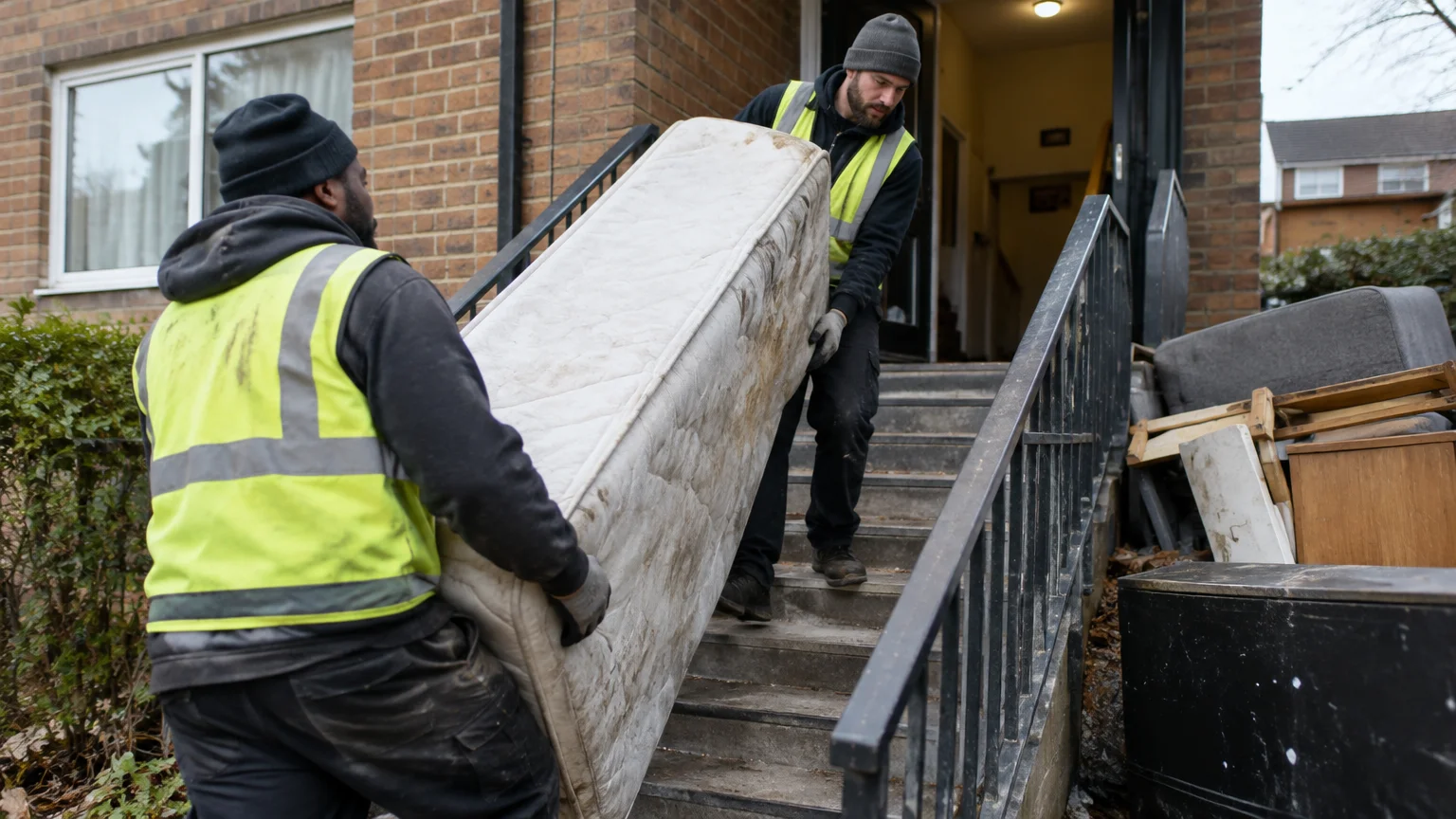
A mattress by an easy ground-floor exit may take less work to move than one upstairs with narrow stairs. A wet or pest-affected mattress may need extra care, or a regular service may not accept it. The trip also matters. A nearby recycling site may not take every type of mattress, so another route may be needed.
The number and type of items can change the work as well. Taking one mattress is not the same as clearing a room with a bed frame, dresser, and other household junk. Broken furniture may need a different plan than a clean mattress. Share a clear list of items and explain the access when you ask for a quote. Mention stains or pests, since these details may affect what the provider can do.
Compare options fairly
Check what each option includes. A retailer take-back program may only be offered with a new delivery. A donation group may have strict rules about mattress condition. A recycler may require you to drop the item off, while a hauling service may collect it inside the home if that service is available. Ask what you need to do yourself.
Do not choose based only on a short service note. Confirm where the item will be picked up, whether it is accepted, and how to prepare it. If you receive a quote, check that it covers the mattress, access, and other items you discussed. This makes it easier to compare the same kind of service and understand what is included.
How do you choose the right mattress disposal option?
Choose a mattress disposal option by checking its condition, local rules, and whether you can move it safely. Try reuse first only if the mattress is clean and accepted. Then check recycling and retailer programs. If those do not work, look for an approved large-item pickup or a removal service.
Follow a simple decision process
- Inspect the mattress. Look for damp spots, stains, pests, tears, and broken parts. Be honest about its condition.
- Check reuse options. Ask charities or community groups if they take this type of mattress in its current state.
- Confirm recycling rules. Ask a facility which materials it takes and how to prepare the mattress.
- Review local collection rules. Find out if you need a planned pickup or a special drop-off.
- Choose safe transport. Get enough help and use a secure vehicle, or arrange a pickup service.
Do not move the mattress until the place you chose says it can take it. This is important if it is stained, damp, large, or affected by pests. Keep any approval and instructions nearby for pickup day. If your first choice falls through, ask the local provider about another approved option. Do not leave the mattress outside while you decide.
Make the plan fit the home
A homeowner with a clean mattress and a suitable vehicle may be able to arrange a local drop-off. Someone in an apartment, with tight stairs or no transport, may need pickup help. A landlord clearing several rooms may want to plan furniture and mattress removal together. Choose a route that follows local rules and can be done safely.
The same steps work in Loveland and other towns: check the condition, confirm acceptance, and plan the move. Loveland Colorado Junk Removal can explain its mattress removal process and what details to share. Keep the mattress dry and contained while you wait. If no reuse, recycling, or pickup option accepts it, ask the local waste service what to do next.
Frequently Asked Questions
How can someone get rid of an old mattress?
First check if the mattress is clean enough for donation. Then ask local charities or reuse groups if they accept it. If they do not, contact a recycler, retailer, local waste provider, or hauling service. Confirm that the option accepts the mattress and learn how to prepare it before moving it. Never leave it at a donation site or curb without approval.
Can a stained mattress be donated?
A group may refuse a stained mattress to protect the next person who uses it. Ask about its rules and describe the stain honestly. Cleaning may not remove deep marks or smells. If the mattress is still stained, look for a recycling or disposal option that accepts its condition.
How do you handle urine stains on a mattress before disposal?
Blot fresh moisture gently without rubbing it farther into the mattress. Follow the maker’s care instructions, and do not soak it or mix cleaning products. Cleaning may not remove a deep stain or smell. If the mattress is still damp or not fit for reuse, tell the disposal provider before pickup.
Can a mattress with bed bugs be put out for pickup?
Do not set it out until the waste provider or removal service confirms its rules. Keep it contained, avoid moving it through shared areas without a cover, and tell the provider about the pests. Some services may refuse it or ask for special wrapping. Follow local instructions rather than giving it away or leaving it outside without approval.
Does every recycling center accept mattresses?
No. A center may take only certain mattress types, sizes, or conditions, and some do not accept mattresses. Check the current rules before you drive there. Ask if it accepts box springs and whether the mattress needs a cover. If the center cannot take it, ask about another approved option nearby.
Key takeaways
- Check the mattress first. A clean, dry mattress may be reused, while a damaged or contaminated one needs another route.
- Confirm acceptance before moving it. Donation groups, recyclers, retailers, and waste services all have different rules.
- Plan a safe path. Clear halls and stairs, get enough help, and secure the mattress during transport.
- Tell the provider about problems. Stains, dampness, pests, and hard access may affect what a service can accept.
- Keep it off unapproved curbs. Arrange a confirmed pickup, drop-off, or hauling plan.
Conclusion
Mattress disposal is easier when you check the condition, local rules, and transport before moving the item. Donation may suit a clean mattress, while recycling or approved hauling may work for one that cannot be reused. Keep stained or pest-affected mattresses contained, and confirm the collection plan before setting anything outside.
For help with mattress removal, Contact us to discuss the item and pickup details. Loveland Colorado Junk Removal can help you understand what information to share when you get in touch.
If you are not sure what you are dealing with, it is worth having someone look at it before it turns into a bigger job. Get in touch with Loveland Colorado Junk Removal today and we will tell you where you stand.