To prepare large appliances for removal, empty each unit, disconnect utilities safely, secure doors and loose parts, and clear the path. Refrigerators, washers, dryers, stoves, ovens, and dishwashers need different care. Loveland Colorado Junk Removal helps property owners plan safe pickup and responsible disposal without risking injury or damage.
Table of Contents
- Why should you prepare large appliances before removal?
- How do you safely disconnect a refrigerator?
- How should washers and dryers be prepared for pickup?
- How do you prepare stoves, ovens, and dishwashers?
- What should you do with appliance doors, cords, and loose parts?
- Where can large appliances be recycled or disposed of responsibly?
- How can you make large appliance removal easier on pickup day?
Why should you prepare large appliances before removal?
Preparing an appliance helps protect people, floors, walls, and door frames. It also helps the removal crew work without extra delays. A heavy appliance can tip, leak, scratch a floor, or damage a narrow door when it is not ready to move.
Preparation also supports safe reuse and recycling. Some appliances contain steel, copper, glass, plastic, and other useful materials. Others need special care because they have gas lines, sealed parts, refrigerant, or electronic pieces.
How does preparation protect people, property, and the appliance?
A homeowner can often handle simple tasks. These include emptying food, removing shelves, wiping surfaces, gathering loose parts, and clearing clutter. The appliance should stay upright when the maker requires it, and no one should lift a very heavy unit alone.
Do not disconnect gas lines, hardwired electrical connections, or refrigerant systems without the right training. A licensed worker may be needed for those tasks. Check the appliance manual before moving the unit because steps can differ by model.
What should be checked before choosing a disposal or pickup option?
First, note the appliance type, size, condition, and location. Check if it is on a porch, in a basement, upstairs, or behind a narrow gate. Look for stairs, sharp turns, low ceilings, and soft ground outside.
Ask if the selected service accepts that type of appliance. Also ask how it handles special parts. Local rules may affect refrigerators, freezers, window air conditioners, and other items with refrigerant. Loveland Colorado Junk Removal can help Loveland property owners understand which steps fit the appliance and the property.
How do you safely disconnect a refrigerator?
A refrigerator should be emptied, unplugged, and ready for a slow, controlled move. Remove food, ice, shelves, drawers, and loose bins first. Do not move the unit until water, power, and any attached line are safely handled.
How should food, shelves, and unsecured parts be removed?
Remove all food and drinks. Put them in a cooler or another working refrigerator. Take out glass shelves, bins, racks, and loose trays, then wrap fragile parts so they do not slide or break.
Wipe up spills and let the inside dry. A dry interior helps limit leaks and odors. Tape or bundle removable parts together, but avoid strong tape on finished surfaces that may peel.
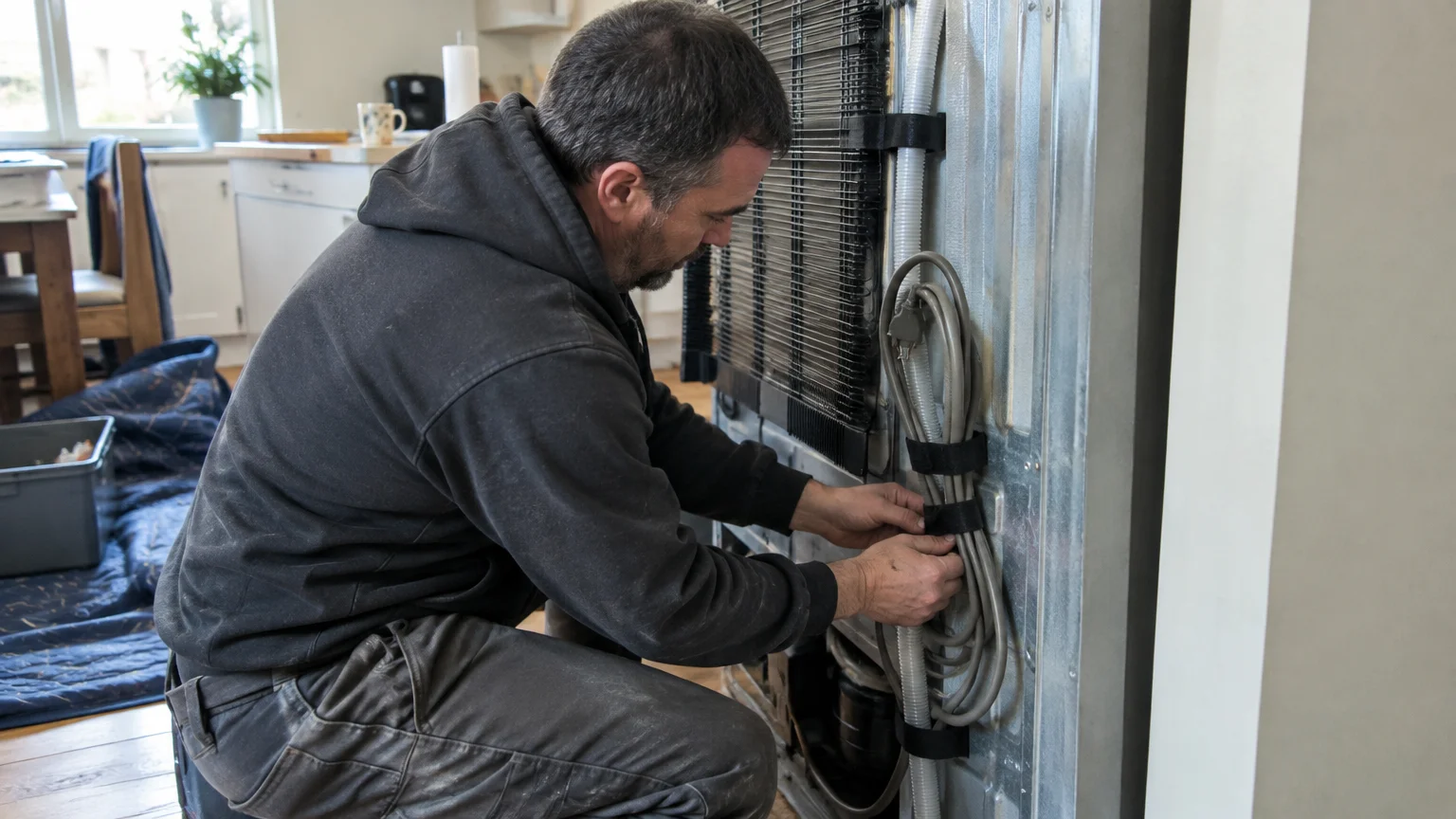
Unplug the refrigerator only when the plug and outlet are easy to reach. Hold the plug firmly as you remove it. Never pull the cord across the room or tug the cord itself.
How should water lines, ice makers, and refrigerant concerns be handled?
A refrigerator with an ice maker or water dispenser may have a line behind it. Shut off the water supply before disconnecting anything. A small container and towel can catch leftover water, but stop if the valve is stuck or the connection is hard to reach.
Refrigerant is a chemical that helps a cooling system move heat. It stays inside a sealed system and should not be released, pierced, or cut. Never puncture cooling coils or remove compressor parts. A trained worker or approved recycling program should recover refrigerant.
Keep the refrigerator upright when possible. Secure the doors so they do not swing during movement. Do not create a child-trapping risk if the unit will sit unattended. Ask the removal provider how it wants the doors handled before pickup.
How should washers and dryers be prepared for pickup?
Washers should be drained and disconnected from water. Dryers need special care around gas and electrical connections. Homeowners can remove clothing, clean the drum, and gather hoses, while utility work may need a trained worker.
How should a washing machine be drained and secured?
Run the final drain cycle if the washer still works. Turn off the hot and cold water valves. Unplug the washer when the outlet is safe to reach. Disconnect hoses only when the fittings turn easily and the setup is meant for homeowner removal.
Keep a shallow pan and towels nearby because water may remain in the hose or pump. Put the hoses inside the washer or tie them together. Secure the drum if the manual recommends transit bolts or another restraint.
A washer is very heavy and can shift on stairs. Difficult routes may need trained movers. This is especially true when there are steps, tight turns, or long carries.
How should a dryer and its connection be checked?
Remove lint from the filter and loose items from the drum. Unplug an electric dryer only when the cord and outlet are in good shape. Do not pull the cord or cut it to make removal easier.
Gas dryers need extra care. A homeowner should not disconnect a gas line unless qualified to do so. A trained worker should shut off the gas supply and check for leaks after approved work. If you smell gas, leave the area and contact the local gas utility or emergency service.
Keep the vent hose and power cord with the dryer unless the provider says otherwise. Report a damaged vent, burned plug, or rusted connection before the appliance is moved.
How do you prepare stoves, ovens, and dishwashers?
Stoves, ovens, and dishwashers should be empty and clean enough for safe handling. They may have gas, electricity, water, sharp edges, and heavy doors. Basic cleaning is safe for most homeowners, but utility work may need a trained worker.
How should cooking appliances be cleaned and secured?
Remove pans, racks, burner grates, knobs, and loose trays. Wipe away grease and food so nothing falls during movement. Let cleaned parts dry before placing them together in a box or bag.
An oven door can swing open and add weight. Follow the manual when removing or securing it. Do not force a hinge or wrap tape around hot or delicate surfaces.
A freestanding electric range may unplug from a nearby outlet. Some units are hardwired instead. A gas range may connect to a flexible gas line. Only a qualified person should disconnect a hardwired or gas appliance.
How should a dishwasher and its connections be handled?
Remove dishes, racks, filters, and standing water. Wipe the inside and the floor near the unit. Turn off water and power before approved disconnection work begins.
Dishwashers are often fixed beneath a counter. They may connect to a drain hose and a hardwired electrical line. Do not pry the unit out or cut connections. A qualified installer or removal worker can find hidden attachments and help prevent cabinet damage.
If a unit leaks, smells like gas, sparks, or has exposed wires, keep people away. Tell the removal provider about the issue before pickup. Clear details help the crew plan a safer removal.
What should you do with appliance doors, cords, and loose parts?
Doors, cords, racks, hoses, and small parts should be secured before the appliance leaves the property. Loose items can fall, cause trips, or become separated from the main unit. Good sorting also makes recycling and reuse easier.
How can doors be secured without creating a hazard?
Follow the maker’s instructions for each appliance. Doors may be taped shut for a short move, but strong tape can harm paint or leave sticky marks. Soft straps or wrap may work better when the surface allows them.
Do not leave an old refrigerator or freezer where a child or pet can climb inside. If a door is removed, store it away from walkways. The removal provider can explain the safest choice for that model.
How should cords, racks, hoses, and removable parts be organized?
Bundle the power cord without sharp bends. Place clean hoses, racks, shelves, trays, and knobs in a labeled bag or box. Keep glass parts apart from heavy metal pieces.
Do not cut cords, drain unknown liquids, or remove sealed parts just to make an appliance smaller. These actions may cause injury or disposal problems. Take photos of unusual connections before a trained worker disconnects them.
A short checklist can help:
- Empty the appliance completely.
- Remove loose shelves, racks, bins, and trays.
- Secure cords, hoses, and small parts.
- Mark damaged, leaking, or unsafe areas.
- Keep parts away from children, pets, and walkways.
Where can large appliances be recycled or disposed of responsibly?
Large appliances may go to a recycling center, transfer station, retailer take-back program, maker program, or professional removal service. The right choice depends on the appliance, local rules, and the site’s acceptance list. A local waste office can explain current requirements in Colorado.
How does appliance recycling and material recovery work?
Appliance recycling starts with safe sorting and preparation. Workers may remove reusable parts and recover refrigerant from cooling equipment. They can also separate metals, plastic, glass, wiring, and insulation for further processing.
Do not assume every site accepts every appliance. Some places accept washers and dryers but need special plans for refrigerators. Others may limit drop-off hours, loading methods, or the number of items accepted.
A professional removal service can help when an appliance is too heavy for a personal vehicle or hard to reach. Loveland Colorado Junk Removal serves the main Loveland area, including Downtown Loveland, Mariana Butte, Berthoud, Johnstown, Windsor, Estes Park, and nearby communities. The team can discuss a safe removal plan without asking the owner to handle heavy lifting alone.
Why do local disposal rules matter for refrigerants and other parts?
Refrigerators and freezers may contain refrigerant in a sealed cooling system. Older appliances may also contain oil, switches, foam, batteries, or electronic controls that need careful handling. Local sites may have different rules for these parts.
Before choosing a drop-off site, ask if it accepts the exact appliance type. Confirm whether the unit must be empty, upright, drained, or handled by an approved provider. Do not leave an appliance beside a dumpster or on a public sidewalk unless local rules clearly allow it.
How can you make large appliance removal easier on pickup day?
Pickup day is easier when the route is clear and the team knows about obstacles. Plan the path from the appliance to the exit. Include doors, halls, stairs, gates, driveways, and the loading area.
How should a safe path be cleared?
Remove rugs, boxes, toys, plants, and small furniture from the route. Protect delicate floors when needed, and keep pets and children in another room. Open gates and unlock doors before the crew arrives when you have permission.
Measure tight doors and turns when the appliance is unusually wide. Check for low branches, loose steps, uneven ground, and wet surfaces outside. Tell the provider about stairs, basements, elevators, or long walks to the vehicle.
Do not move the appliance into a hallway before the route is ready. It could block an exit or make the final move harder. A clear plan helps protect walls and lowers the chance of a tip or slip.
When should professional removal help be arranged?
Professional help is wise when an appliance is heavy, built in, upstairs, connected to gas, hardwired, leaking, or hard to access. It is also useful when the owner lacks a suitable vehicle or cannot safely lift and carry the unit.
A homeowner can handle emptying, cleaning, sorting, and simple unplugging when the setup is safe. Stop and ask for help when a connection is hidden, stuck, damaged, or linked to gas, water, or refrigerant.
Key takeaways:
- Empty and clean each appliance before moving it.
- Disconnect utilities only when it is safe and allowed.
- Keep refrigerant systems sealed and undamaged.
- Secure doors, cords, hoses, and loose parts.
- Clear the route and report hazards before pickup.
Frequently Asked Questions
Can a homeowner prepare an old appliance without professional help?
Yes, a homeowner can usually empty, clean, sort loose parts, and clear the route. Simple unplugging may also be safe when the outlet is easy to reach. Gas lines, hardwired connections, refrigerant systems, stuck fittings, and heavy carries should be handled by a qualified person.
What happens to old appliances after removal?
Many large appliances are sorted for recycling, reuse, or disposal. Workers may recover metals, plastics, glass, and usable parts. Refrigerators and freezers need special care because their sealed cooling systems may contain refrigerant. The final process depends on local rules and the appliance condition.
Can an appliance be left beside a dumpster?
Usually, an appliance should not be left beside a dumpster without checking local rules first. Some properties and waste programs ban bulky items in that area. Refrigerators, freezers, and other appliances may need special handling. A scheduled pickup or approved drop-off is often safer.
Should refrigerator doors be removed before pickup?
Not always. The best choice depends on the model, route, and removal plan. Doors should never create a child or pet hazard while the unit waits. Follow the manual and ask the removal provider before removing hinges, seals, or heavy doors.
Where can someone recycle a washer or dryer?
Possible options include a local recycling center, transfer station, retailer program, maker program, or appliance removal service. Acceptance rules vary. Identify the exact appliance, ask whether it is accepted, and confirm preparation needs before arranging transport.
Conclusion
Large appliance removal starts with careful preparation. Emptying the unit, protecting loose parts, checking connections, and clearing the route can prevent common problems. When the appliance is heavy, built in, damaged, or connected to gas or refrigerant, professional help is safer.
Loveland Colorado Junk Removal helps homeowners, businesses, and property owners plan large appliance removal and nearby communities. Contact us to arrange a safe pickup and responsible disposal plan.